 Spiritual
Prayers
Daśāvatāra-stotra 534

Mukunda-māla-stotra 539
Kuntī-stotra 546
Śukadeva stotra 556
Prahlāda-stotra 561
Brahmā-stotra 571
Brahma-saṁhitā 579
Daśāvatāra-stotra
Jayadeva Gosvāmī
1 pralaya-payodhi-jāle dhṛtavān asi vedaṁ
vihita-vahitra-caritram akhedam keśava dhṛta-mīna-śarīra jaya jagadīśa hare pralaya-payodhi-jale—in the turbulent waters of devastation; dhṛtavān—holding; asi—You are; vedam—the Vedas; vihita—done; vahitra-caritram—acting as a boat; akhedam—easily; keśava—O Keśava, of fine hair!; dhṛta-mīna-śarīra—You who have accepted the form of a giant fish; jaya—all glories to You!; jagat-īśa—O Lord of the universe!; hare—O Lord Hari!
O Keśava! O Lord of the universe! O Lord Hari, who have assumed the form of a fish! All glories to You! You easily acted as a boat in the form of a giant fish just to give protection to the Vedas, which had become immersed in the turbulent sea of devastation.
2 kṣitir iha vipulatare tiṣṭhati tava pṛṣṭhe
dharaṇi-dhāraṇa-kiṇa-cakra-gariṣṭhe keśava dhṛta-kūrma-śarīra jaya jagadīśa hare kṣitiḥ—the great Mandara Mountain; iha—here; vipulatare—gigantic; tiṣṭhati— rests; tava pṛṣṭhe—upon Your back; dharaṇi-dhāraṇa—holding up the world; kiṇa- cakra—a large circular scar; gariṣṭhe—the heaviest; keśava—O Lord Keśava, of fine hair!; dhṛta-kūrma-śarīra—who have accepted the form of a tortoise; jaya—all glories to You!; jagat-īśa—O Lord of the universe!; hare—O Lord Hari!
O Keśava! O Lord of the universe! O Lord Hari, who have assumed the form of a tortoise! All glories to You! In this incarnation as a divine tortoise the great Mandara Mountain rests upon Your gigantic back as a pivot for churning the ocean of milk. From holding up the huge mountain a large scarlike depression is put in Your back, which has become most glorious.
3 vasati daśana-śikhare dharaṇī tava lagnā
śaśini kalaṅka-kaleva nimagnā keśava dhṛta-śūkara-rūpa jaya jagadīśa hare vasati—sits; daśana-śikhare—upon the tip of Your tusk; dharaṇī—the earth; tava—Your; lagnā—sits fixed; śaśini—of the moon; kalaṅka-kala—a faint spot; iva—just like; nimagnā—which had become immersed (in the Garbhodaka Ocean); keśava—O Lord Keśava, of fine hair!; dhṛta-śūkara-rūpa—who have accepted the form of a boar; jaya—all glories to You!; jagat-īśa—O Lord of the universe!; hare— O Lord Hari!
O Keśava! O Lord of the universe! O Lord Hari, who have assumed the form of a boar! All glories to You! The earth, which had become immersed in the Garbhodaka Ocean at the bottom of the universe, sits fixed upon the tip of Your tusk like a spot upon the moon.
4 tava kara-kamala-vare nakham adbhuta-śṛṅgaṁ
dalita-hiraṇyakaśipu-tanu-bhṛṅgam keśava dhṛta-narahari-rūpa jaya jagadīśa hare tava—Your; kara-kamala-vare—upon the beautiful lotus hands; nakham—the nails; adbhuta-śṛṅgam—wonderfully sharp tips; dalita—ripped apart; hiraṇyakaśipu-tanu—the body of the demon Hiraṇyakaśipu; bhṛṅgam—the wasp; keśava—O Lord Keśava, of fine hair!; dhṛta-narahari-rūpa—who have accepted the form of half-man, half-lion (nara—man, hari—lion); jaya—all glories to You!; jagat-īśa—O Lord of the universe!; hare—O Lord Hari!
O Keśava! O Lord of the universe! O Lord Hari, who have assumed the form of half-man, half-lion! All glories to You! Just as one can easily crush a wasp between one's fingernails, so in the same way the body of the wasplike demon Hiraṇyakaśipu has been ripped apart by the wonderful pointed nails on Your beautiful lotus hands.
5 chalayasi vikramaṇe balim adbhuta-vāmana
pada-nakha-nīra-janita-jana-pāvana keśava dhṛta-vāmana-rūpa jaya jagadīśa hare chalayasi—You deceive; vikramaṇe—by Your massive steps; balim—King Bali; adbhuta-vāmana—O wonderful dwarf!; pada-nakha—from the nails of Your lotus feet; nīra-janita—by the (Ganges) water that has emanated; jana-pāvana—You deliver all living beings within this world; keśava—O Lord Keśava, of fine hair!; dhṛta-vāmana-rūpa—who have accepted the form of a dwarf-brāhmaṇa; jaya—all glories to You!; jagat-īśa—O Lord of the universe!; hare—O Lord Hari!
O Keśava! O Lord of the universe! O Lord Hari, who have assumed the form of a dwarf-brāhmaṇa! All glories to You! O wonderful dwarf, by Your massive steps You deceive King Bali, and by the Ganges water that has emanated from the nails of Your lotus feet, You deliver all living beings within this world.
6 kṣatriya-rudhira-maye jagad-apagata-pāpam
snapayasi payasi śamita-bhava-tāpam keśava dhṛta-bhṛgupati-rūpa jaya jagadiśa hare kṣatriya-rudhira-maye—in the rivers of blood from the bodies of the demoniac kṣatriyas that You have slain; jagat—the earth; apagata-pāpam—the sins are taken away; snapayasi—You cause to bathe; payasi—in the water; śamita— people are relieved; bhava-tāpam—from the blazing fire of material existence; keśava—O Lord Keśava, of fine hair!; dhṛta-bhṛgupati-rūpa—who have accepted the form of Paraśurāma, protector of the sages (bhṛgu—of the sages, pati—the protector); jaya—all glories to You!; jagat-īśa—O Lord of the universe!; hare—O Lord Hari!
O Keśava! O Lord of the universe! O Lord Hari, who have assumed the form of Bhṛgupati [Paraśurāma]! All glories to You! At Kurukṣetra You bathe the earth in the rivers of blood from the bodies of the demoniac kṣatriyas that You have slain. The sins of the world are washed away by You, and because of You people are relieved from the blazing fire of material existence.
7 vitarasi dikṣu raṇe dik-pati-kamanīyaṁ
daśa-mukha-mauli-balim ramaṇīyam keśava dhṛta-rāma-śarīra jaya jagadiśa hare vitarasi—You distribute; dikṣu—in all directions; raṇe—in the battle (of Laṅkā); dik- pati—to the presiding deities of the ten directions; kamanīyam—which was desired by all of them; daśa-mukha—the ten-headed demon Rāvaṇa; mauli-balim—as a great offering; ramaṇīyam—delightful; keśava—O Lord Keśava, of fine hair!; dhṛta- rāma-śarīra—who have accepted the form of Rāmacandra; jaya jagadīśa hare...jaya—all glories to You!; jagat-īśa—O Lord of the universe!; hare—O Lord Hari!
O Keśava! O Lord of the universe! O Lord Hari, who have assumed the form of Rāmacandra! All glories to You! In the battle of Laṅkā You destroy the ten- headed demon Rāvaṇa and distribute his heads as a delightful offering to the presiding deities of the ten directions, headed by Indra. This action was long desired by all of them, who were much harassed by this monster.
8 vahasi vapuṣi viśade vasanaṁ jaladābhaṁ
hala-hati-bhīti-milita-yamunābham keśava dhṛta-haladhara-rūpa jaya jagadiśa hare vahasi—You wear; vapuṣi viśade—on Your brilliant white body; vasanam— garments; jalada-ābham—the color of a fresh blue rain cloud; hala-hati—due to the striking of Your plowshare; bhīti—who feels great fear; milita—happened; yamunā- bham—the personified river Yamunā appeared; keśava—O Lord Keśava, of fine hair!; dhṛta-haladhara-rūpa—who have accepted the form of Lord Balarāma, the wielder of the plow (hala—plow, dhara—the holder); jaya—all glories to You!; jagat- īśa—O Lord of the universe!; hare—O Lord Hari!
O Keśava! O Lord of the universe! O Lord Hari, who have assumed the form of Balarāma, the wielder of the plow! All glories to You! On Your brilliant white body You wear garments the color of a fresh blue rain cloud. These garments are colored like the beautiful dark hue of the River Yamunā, who feels great fear due to the striking of Your plowshare.
9 nindāsī yajña-vidher ahaha śruti-jātaṁ
sadaya-hṛdaya darśita-paśu-ghātam keśava dhṛta-buddha-śarīra jaya jagadīśa hare nindasi—You decry; yajña-vidheḥ—performed by the rules of Vedic sacrifice; ahaha—oh!; śruti-jātam—according to the scriptures; sadaya-hṛdaya—of compassionate heart; darśita—shown; paśu-ghātam—the slaughtering of poor animals; keśava—O Lord Keśava, of fine hair!; dhṛta-buddha-śarīra—who have accepted the form of Lord Buddha; jaya—all glories to You!; jagat-īśa—O Lord of the universe!; hare—O Lord Hari!
O Keśava! O Lord of the universe! O Lord Hari, who have assumed the form of Buddha! All glories to You! O Buddha of compassionate heart, you decry the slaughtering of poor animals performed according to the rules of Vedic sacrifice.
10 mleccha-nivaha-nidhane kalayasi karavālaṁ
dhūmaketum iva kim api karālam keśava dhṛta-kalki-śarīra jaya jagadīśa hare mleccha-nivaha—the multitude of wicked barbarian men (at the end of the Kali- yuga); nidhane—for annihilating; kalayasi—You carry; karavālam—a sword; dhūmaketum iva—appearing like a comet; kim api—indescribably; karālam— terrifying; keśava—O Lord Keśava, of fine hair!; dhṛta-kalki-śarīra—who have accepted the form of Lord Kalki; jaya—all glories to You!; jagat-īśa—O Lord of the universe!; hare—O Lord Hari!
O Keśava! O Lord of the universe! O Lord Hari, who have assumed the form of Kalki! All glories to You! You appear like a comet and carry a terrifying sword for bringing about the annihilation of the wicked barbarian men at the end of the Kali-yuga.
11 śrī-jayedeva-kaver idam uditam udāraṁ śṛṇu sukha-daṁ śubha-daṁ bhava-sāram keśava dhṛta-daśa-vidha-rūpa jaya jagadīśa hare śrī-jayadeva-kaveḥ—of the poet Jayadeva; idam—this hymn; uditam—which has arisen; udāram—which is most exalted; śṛṇu—please hear; sukha-dam—a bestower of happiness; śubha-dam—a bestower of auspiciousness; bhava- sāram—and is the best thing in this dark world; keśava—O Lord Keśava, of fine hair!; dhṛta—who have accepted; daśa-vidha-rūpa—these ten different forms of incarnation; jaya—all glories to You!; jagat-īśa—O Lord of the universe!; hare—O Lord Hari!
O Keśava! O Lord of the universe! O Lord Hari, who have assumed these ten different forms of incarnation! All glories to You! O readers, please hear this hymn of the poet Jayadeva, which is most excellent, an awarder of happiness, a bestower of auspiciousness, and is the best thing in this dark world.
Commentary
This is another bhajana frequently chanted and quoted by Śrīla Prabhupāda. In this poem, Jayadeva Gosvāmī, a Vaiṣṇava poet who lived about 700 years before Śrī Caitanya Mahāprabhu, glorifies the ten main avatāras of the Lord. The Third Chapter of the First Canto of Śrīmad-Bhāgavatam, entitled “Kṛṣṇa is the Source of all Incarnations” describes the different incarnations in great detail. In the purport to Text 28, Prabhupāda writes: In this particular stanza Lord Śrī Kṛṣṇa, the Personality of Godhead, is distinguished from other incarnations. He is counted amongst the avatāras because out of His causeless mercy the Lord descends from His transcendental abode. Avatāra means "one who descends." All the incarnations of the Lord, including the Lord Himself, descend to the different planets of the material world, as also in different species of life, to fulfill particular missions. Sometimes He comes Himself, and sometimes His different plenary portions or parts of the plenary portions, or His differentiated portions directly or indirectly empowered by Him, descend to this material world to execute certain specific functions. Originally the Lord is full of all opulences, all prowess, all fame, all beauty, all knowledge and all
renunciation. When they are partly manifested through the plenary portions or parts of the plenary portions, it should be noted that certain manifestations of His different powers are required for those particular functions. When in the room small electric bulbs are displayed, it does not mean that the electric powerhouse is limited by the small bulbs. The same powerhouse can supply power to operate large-scale industrial dynamos with greater volts. Similarly, the incarnations of the Lord display limited powers because so much power is needed at that particular time. For example, Lord Paraśurāma and Lord Nṛsiṁha displayed unusual opulence by killing the disobedient kṣatriyas twenty-one times and killing the greatly powerful atheist Hiraṇyakaśipu. Hiraṇyakaśipu was so powerful that even the demigods in other planets would tremble simply by the unfavorable raising of his eyebrow. The demigods in the higher level of material existence many, many times excel the most well-to-do human beings in longevity, beauty, wealth, paraphernalia and all other respects. Still they were afraid of Hiraṇyakaśipu. Thus we can simply imagine how powerful Hiraṇyakaśipu was in this material world. But even Hiraṇyakaśipu was cut into small pieces by the nails of Lord Nṛsiṁha. This means that anyone materially powerful cannot stand the strength of the Lord's nails. Similarly, Jāmadagnya displayed the Lord's power to kill all the disobedient kings powerfully situated in their respective states. The Lord's empowered incarnation Nārada and plenary incarnation Varāha, as well as indirectly empowered Lord Buddha, created faith in the mass of people. The incarnations of Rāma and Dhanvantari displayed His fame, and Balarāma, Mohinī and Vāmana exhibited His beauty. Dattātreya, Matsya, Kumāra and Kapila exhibited His transcendental knowledge. Nara and Nārāyaṇa Ṛṣis exhibited His renunciation. So all the different indirectly or directly empowered incarnations of the Lord manifested different features, but Lord Kṛṣṇa, the primeval Lord, exhibited the complete features of Godhead, and thus it is confirmed that He is the source of all other incarnations.
Mukunda-mala-stotra
King Kulaśekhara
1 śrī-vallabheti vara-deti dayā-pareti bhakta-priyeti bhava-luṇṭhana-kovideti nātheti nāga-śayaneti jagan-nivāseti ālāpinaṁ prati-dinaṁ kuru māṁ mukunda śrī-vallabha—O beloved of Lakṣmī (the Supreme Lord's consort); iti—thus; vara- da—O bestower of benedictions; iti—thus; dayā-para—O causelessly merciful one; iti—thus; bhakta-priya—O You who are very dear to Your devotees; iti—thus; bhava—the repetition of birth and death; luṇṭhana—in plundering; kovida—O You who are expert; iti—thus; nātha—O Lord; iti— thus; nāga-śayana—O You who sleep on the serpent bed (of Ananta Śeṣa); iti—thus; jagat-nivāsa—O resort of the cosmos; iti—thus; ālāpinam— reciter; prati-dinam—every day; kuru—please make; mām—me; mukunda—O Mukunda.
O Mukunda, my Lord! Please let me become a constant reciter of Your names, addressing You as Śrī-vallabha ["He who is very dear to Lakṣmī"], Varada ["the bestower of benedictions"], Dayāpara ["He who is causelessly merciful"], Bhakta-priya ["He who is very dear to His devotees"], Bhava-luṇṭhana-kovida ["He who is expert at plundering the status quo of repeated birth and death"], Nātha ["the Supreme Lord"], Jagan-nivāsa ["the resort of the cosmos"], and Nāga-śayana ["the Lord who lies down on the serpent bed"].
2 jayatu jayatu devo devakī-nandano 'yaṁ jayatu jayatu kṛṣṇo vṛṣṇi-vaṁśa-pradīpaḥ jayatu jayatu megha-śyāmalaḥ komalāṅgo jayatu jayatu pṛthvī-bhāra-nāśo mukundaḥ jayatu jayatu—all glories, all glories; devaḥ—to the Personality of Godhead; devakī-nandanaḥ—son of Devakī; ayam—this; jayatu jayatu—all glories, all glories; kṛṣṇaḥ—to Lord Kṛṣṇa; vṛṣṇi—of Vṛṣṇi (Lord Kṛṣṇa's forefather); vaṁśa—of the dynasty; pradīpaḥ—the beacon light; jayatu jayatu—all glories, all glories; megha—like a new cloud; śyāmalaḥ—who is blackish; komala—very soft; aṅgaḥ—whose body; jayatu jayatu—all glories, all glories; pṛthvī—the earth's; bhāra—of the burden; nāśaḥ—to the destroyer; mukundaḥ—Lord Śrī Kṛṣṇa.
All glories to this Personality of Godhead known as the son of Śrīmatī Devakī devī! All glories to Lord Śrī Kṛṣṇa, the brilliant light of the Vṛṣṇi dynasty! All glories to the Personality of Godhead, the hue of whose soft body resembles the blackish color of a new cloud! All glories to Lord Mukunda, who removes the burdens of the earth!
3 mukunda mūrdhnā praṇipatya yāce bhavantam ekāntam iyantam artham avismṛtis tvac-caraṇāravinde bhave bhave me 'stu bhavat-prasādāt mukunda—O Lord Mukunda; mūrdhnā—with my head; praṇipatya— bowing down; yāce—I respectfully beg; bhavantam—from You; ekāntam— exclusively; iyantam—this much; artham—desire to be fulfilled; avismṛtiḥ— freedom from forgetfulness; tvat—Your; caraṇa-aravinde—at the lotus feet; bhave bhave—in each repeated birth; me—my; astu—let there be; bhavat—Your; prasādāt—by the mercy.
O Lord Mukunda! I bow down my head to Your Lordship and respectfully ask You to fulfill this one desire of mine: that in each of my future births I will, by Your Lordship's mercy, always remember and never forget Your lotus feet.
4 nāhaṁ vande tava caraṇayor dvandvam advandva-hetoḥ kumbhī-pākaṁ gurum api hare nārakaṁ nāpanetum ramyā-rāmā-mṛdu-tanu-latā-nandane nābhirantuṁ bhāve bhāve hṛdaya-bhavane bhāvayeyaṁ bhavantam na—not; aham—I; vande—pray; tava—Your; caraṇayoḥ—of the lotus feet; dvandvam—to the pair; advandva—of release from duality; hetoḥ—for the reason; kumbhīpākam—the planet of boiling oil; gurum—most severe; api—either; hare—O Hari; nārakam—hell; na—not; apanetum—to avoid; ramyā—very beautiful; rāmā—of the fair sex; mṛdu—soft; tanu-latā—of creeperlike bodies; nandane—in the pleasure gardens of heaven; na api— nor; rantum—to enjoy; bhāve bhāve—in various rebirths; hṛdaya—of my heart; bhavane—within the house; bhāvayeyam—may I concentrate; bhavantam—on You.
O Lord Hari, it is not to be saved from the dualities of material existence or the grim tribulations of the Kumbhīpāka hell that I pray to Your lotus feet. Nor is my purpose to enjoy the soft-skinned beautiful women who reside in the gardens of heaven. I pray to Your lotus feet only so that I may remember You alone in the core of my heart, birth after birth.
5 nāsthā dharme na vasu-nicaye naiva kāmopabhoge yad bhāvyaṁ tad bhavatu bhagavan pūrva-karmānurūpam etat prārthyaṁ mama bahu-mataṁ janma-janmāntare ’pi tvat-pādāmbho-ruha-yuga-gatā niścalā bhaktir astu na—not; āsthā—special regard; dharme—for religiosity; na—nor; vasu— of wealth; nicaye—for the accumulation; na eva—nor even; kāma- upabhoge—for sense enjoyment; yat—whatever; bhāvyam—inevitable; tat—that; bhavatu—let it happen; bhagavan—O Lord; pūrva—previous; karma—my deeds; anurūpam—according to; etat—this; prārthyam—to be requested; mama—by me; bahu matam—most desirable; janma-janma— birth after birth; antare—during; api—even; tvat—Your; pāda- ambhoruha—of lotus feet; yuga—in the pair; gatā—resting; niścalā— unflinching; bhaktiḥ—devotion; astu—may there be.
O my Lord! I have no attachment for religiosity, or for accumulating wealth, or for enjoying sense gratification. Let these come as they inevitably must, in accordance with my past deeds. But I do pray for this most cherished boon: birth after birth, let me render unflinching devotional service unto Your two lotus feet.
6 divi vā bhuvi vā mamāstu vāso narake vā narakāntaka prakāmam avadhīrita-śāradāravindau caraṇau te maraṇe 'pi cintayāmi divi—in the abode of the demigods; vā—or; bhuvi—on the earth, the home of human beings; vā—or; mama—my; astu—may be; vāsaḥ—residence; narake—in hell; vā—or; naraka-antaka—O killer of the demon Naraka; prakāmam—however You desire; avadhīrita—which have defied; śārada— of the fall season; aravindau—the lotus flowers; caraṇau—the two feet; te— Your; maraṇe—at the time of death; api—even; cintayāmi—may I remember.
O Lord, killer of the demon Naraka! Let me reside either in the realm of the demigods, in the world of human beings, or in hell, as You please. I pray only that at the point of death I may remember Your two lotus feet, whose beauty defies that of the lotus growing in the Śarat season.
33 kṛṣṇa tvadīya-pada-paṅkaja-pañjarāntam
adyaiva viśatu me mānasa-rāja-haṁsaḥ prāṇa-prayāṇa-samaye kapha-vāta-pittaiḥ kaṇṭhāvarodhana-vidhau smaraṇaṁ kutas te kṛṣṇa—O Lord Kṛṣṇa; tvadīya—Your; pada—feet; paṅkaja—lotus flower; pañjara—the network; antam—the edge; adya—now, at this moment; eva—certainly; me—my; viśatu—may enter; mānasa—mind; rāja—royal; haṁsa—swan; prāṇa-prayāṇa—of death; samaye—at the time; kapha— mucus; vāta—air; pittaiḥ—and with bile; kaṇṭha—throat; avarodhana- vidhau—when it is choked; smaraṇam—remembrance; kutaḥ—how is it possible; te—of You.
O Lord Kṛṣṇa, at this moment let the royal swan of my mind enter the tangled stems of the lotus of Your feet. How will it be possible for me to remember You at the time of death, when my throat will be choked up with mucus, bile, and air?
49 tat tvaṁ prasīda bhagavan kuru mayy anāthe
viṣṇo kṛpāṁ parama-kāruṇikaḥ khalu tvam
saṁsāra-sāgara-nimagnam ananta dīnam
uddhartum arhasi hare puruṣottamo 'si
at—therefore; tvam—You; prasīda—please show Your favor; bhagavan— O Supreme Lord; kuru—please give; mayi—to me; anāthe—who am without a master; viṣṇo—O Viṣṇu; kṛpām—mercy; parama—the most; kāruṇikaḥ—compassionate; khalu—after all; tvam—You; saṁsāra—of material existence; sāgara—in the ocean; nimagnam—submerged; ananta—O limitless one; dīnam—wretched; uddhartum—to lift up; arhasi— You should please; hare—O Hari; puruṣa-uttamaḥ—the Supreme Personality of Godhead; asi—You are.
O Supreme Lord, O Viṣṇu, You are the most compassionate. So now please show me Your favor and bestow Your mercy upon this helpless soul. O unlimited Lord, kindly uplift this wretch who is drowning in the ocean of material existence. O Lord Hari, You are the Supreme Personality of Godhead.
Commentary
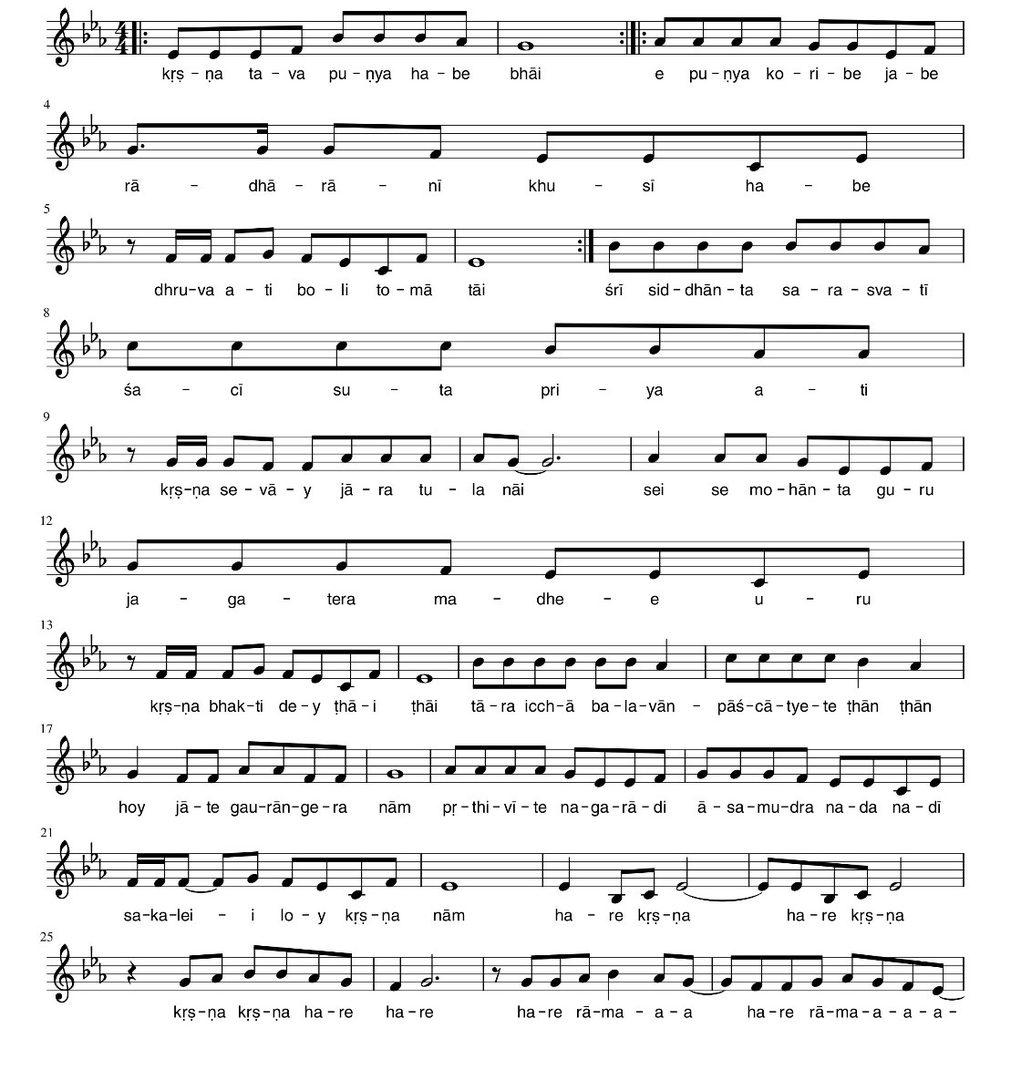
Using a Sanskrit edition published by Śrīla Bhaktivinoda Ṭhākura in 1895, Prabhupāda began translating the Mukunda-mālā-stotra in the late 1950's. But after completing six verses with commentary, he suspended the work in order to translate Śrīmad-Bhāgavatam. He never resumed Mukunda-mālā-stotra. Yet he clearly intended that these prayers be published, since he included them in the list of his other English books at the beginning of each of the three volumes of the Bhāgavatam's First Canto. In 1989, the Governing Body Commission of the International Society for Krishna Consciousness requested Satsvarūpa dāsa Goswami to complete the Mukunda- mālā-stotra. In the purport to Verse 33 (kṛṣṇa tvadīya-pada-paṅkaja-pañjarāntam), Satsvarūpa Mahārāja writes: “Of all the verses of the Mukunda-mālā-stotra, this one was the most beloved of Śrīla Prabhupāda. He frequently quoted it and sang it as a bhajana. On one of the first record albums His Divine Grace produced, he sang this śloka as a complete song. Devotees who served Śrīla Prabhupāda often heard him sing it as he went about his daily activities, or sometimes alone in his room. He also quoted it many times in his purports.” What follows are some of those quotations about the verse beginning with kṛṣṇa tvadīya-pada-paṅkaja-pañjarāntam. Our recording of these prayers is based on Śrīla Prabhupāda’s tune.
Śrīmad-Bhāgavatam 2.4.21 — Puport There is an intimate relationship between the swan and the lotus stem. So the comparison is very appropriate: without becoming a swan, or paramahaṁsa, one cannot enter into the network of the lotus feet of the Lord. As stated in the Brahma- saṁhitā, the mental speculators, even by dint of learned scholarship, cannot even dream of the Absolute Truth by speculating over it for eternity. The Lord reserves the right of not being exposed to such mental speculators. And because they cannot enter into network stem of the lotus stem of the Lord, all material speculators differ in conclusions, and at the end they make a useless compromise by saying, "as many conclusions, as many ways," according to one's own inclination. But the Lord is not like a shopkeeper trying to please all sorts of customers in the mental speculator exchange. The Lord is what He is, the Absolute Personality of Godhead, and He demands absolute surrender unto Him only. The pure devotee, however, by following the ways of previous ācāryas, or authorities, can see the Supreme Lord through the transparent medium of a bona fide spiritual master (anupaśyanti). Lecture on Śrīmad-Bhāgavatam 1.2.8 — Bombay, December 26, 1972 Kṛṣṇa says: yaṁ yaṁ vāpi smaran loke tyajaty ante kalevaram. At the time of death our remembrance to a certain thing gives me next body. If I think like a dog, then I become next life a dog, and if I think like a god, then I, next life I become god. That is the test at the time of death. So unless you practice, how you can remember Kṛṣṇa at the time of death? Therefore, Saṁrāj Kulaśekhara, the great emperor devotee, he is praying to Kṛṣṇa, kṛṣṇa tvadīya-pada-paṅkaja-pañjarāntam adyaiva viśatu me mānasa-rāja-haṁsaḥ. "My dear Lord Kṛṣṇa, now I am healthy, I am thinking rightly, kindly give me immediately death, and I can be entangled with Your lotus feet tight, like the swan entangles itself with the lotus stem." You have seen, the swans take pleasure by entangling itself with the lotus stem. It goes down the water and catches the stem and binds itself. In this way, it is a sporting of the swan. So Samraj Kulaśekhara says, kṛṣṇa tvadīya-pada-paṅkaja-pañjarāntam adyaiva viśatu me mānasa-rāja-hāmsaḥ. "At the present moment my mind is just like the swan. It is playing with Your lotus stem. So, let me die immediately. Otherwise, if I die ordinarily," prāṇa-prayāṇa-samaye kapha-vāta-pittaiḥ, "the three elements kapha, pitha, bile, they will overwhelm me, and I may not remember You at that time. I may forget You. So Kṛṣṇa, give me immediately death so that I, remembering, I may die." This is process. Kṛṣṇa consciousness means somehow or other try to remember Kṛṣṇa at the time of death, ante nārāyaṇa-smṛtiḥ. Then your life is successful. Lecture on Bhagavad-gītā 2.40 — London, September 13, 1973 Ante nārāyaṇa-smṛtiḥ. At the time of death, somehow or other, if you can remember Nārāyaṇa, Kṛṣṇa, your life is successful. Therefore, practice, practice, while you are strong, while you are in good life, practice how to remember Nārāyaṇa, Kṛṣṇa, always. Therefore Kulaśekhara, Mahārāja Kulaśekhara, he has written his Stotra- mālā, very important: kṛṣṇa tvadīya-pada-paṅkaja-pañjarāntam… He's thinking, "My Lord, Kṛṣṇa, now I am strong. Kindly give me the chance to die immediately. Give me the chance. Because now I can remember. But if I die in the natural way, when I am too old, it may be that kapha-pitta, because this is the body of tri-dhātuka, kapha, pitta, vāyu, so my throat will be choked up by mucus and I may be unconscious, I may not be able to chant at the time of death Your name. So now I am strong, please immediately give me death."
Kuntī-stotra
SB 1.8.18-33
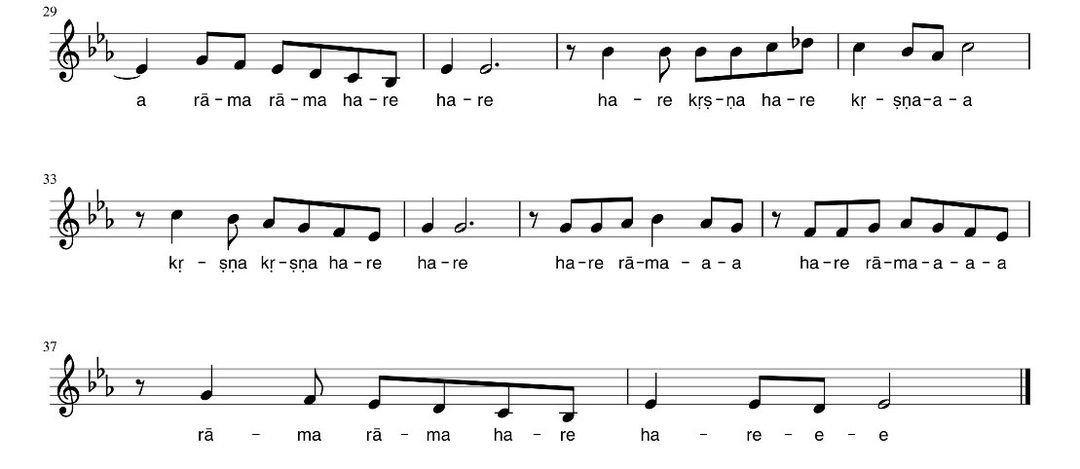
18 kunty uvāca namasye puruṣaṁ tvādyam
īśvaraṁ prakṛteḥ param alakṣyaṁ sarva-bhūtānām
antar bahir avasthitam
kuntī uvāca—Śrīmatī Kuntī said; namasye—let me bow down; puruṣam—the Supreme Person; tvā—You; ādyam—the original; īśvaram—the controller; prakṛteḥ—of the material cosmos; param—beyond; alakṣyam—the invisible; sarva—all; bhūtānām—of living beings; antaḥ—within; bahiḥ—without; avasthitam—existing.
Śrīmatī Kuntī said: O Kṛṣṇa, I offer my obeisances unto You because You are the original personality and are unaffected by the qualities of the material world. You are existing both within and without everything, yet You are invisible to all.
19 māyā-javanikācchannam ajñādhokṣajam avyayam na lakṣyase mūḍha-dṛśā naṭo nāṭyadharo yathā māyā—deluding; javanikā—curtain; ācchannam—covered by; ajñā—ignorant; adhokṣajam—beyond the range of material conception (transcendental); avyayam—irreproachable; na—not; lakṣyase—observed; mūḍha-dṛśā—by the foolish observer; naṭaḥ—artist; nāṭya-dharaḥ—dressed as a player; yathā—as.
Being beyond the range of limited sense perception, You are the eternally irreproachable factor covered by the curtain of deluding energy. You are invisible to the foolish observer, exactly as an actor dressed as a player is not recognized.
20 tathā paramahaṁsānāṁ
munīnām amalātmanām bhakti-yoga-vidhānārthaṁ kathaṁ paśyema hi striyaḥ tathā—besides that; paramahaṁsānām—of the advanced transcendentalists; munīnām—of the great philosophers or mental speculators; amala-ātmanām— those whose minds are competent to discern between spirit and matter; bhakti- yoga—the science of devotional service; vidhāna-artham—for executing; katham—how; paśyema—can observe; hi—certainly; striyaḥ—women.
You Yourself descend to propagate the transcendental science of devotional service unto the hearts of the advanced transcendentalists and mental speculators, who are purified by being able to discriminate between matter and spirit. How, then, can we women know You perfectly?
21 kṛṣṇāya vāsudevāya devakī-nandanāya ca nanda-gopa-kumārāya govindāya namo namaḥ kṛṣṇāya—the Supreme Lord; vāsudevāya—unto the son of Vasudeva; devakī- nandanāya—unto the son of Devakī; ca—and; nanda-gopa—Nanda and the cowherd men; kumārāya—unto their son; govindāya—unto the Personality of Godhead, who enlivens the cows and the senses; namaḥ—respectful obeisances; namaḥ—obeisances.
Let me therefore offer my respectful obeisances unto the Lord, who has become the son of Vasudeva, the pleasure of Devakī, the boy of Nanda and the other cowherd men of Vṛndāvana, and the enlivener of the cows and the senses.
22 namaḥ paṅkaja-nābhāya
namaḥ paṅkaja-māline namaḥ paṅkaja-netrāya namas te paṅkajāṅghraye namaḥ—all respectful obeisances; paṅkaja-nābhāya—unto the Lord who has a specific depression resembling a lotus flower in the center of His abdomen; namaḥ—obeisances; paṅkaja-māline—one who is always decorated with a garland of lotus flowers; namaḥ—obeisances; paṅkaja-netrāya—one whose glance is as cooling as a lotus flower; namaḥ te—respectful obeisances unto You; paṅkaja-aṅghraye—unto You, the soles of whose feet are engraved with lotus flowers (and who are therefore said to possess lotus feet).
My respectful obeisances are unto You, O Lord, whose abdomen is marked with a depression like a lotus flower, who are always decorated with garlands of lotus flowers, whose glance is as cool as the lotus and whose feet are engraved with lotuses.
23 yathā hṛṣīkeśa khalena devakī kaṁsena ruddhāticiraṁ śucārpitā vimocitāhaṁ ca sahātmajā vibho tvayaiva nāthena muhur vipad-gaṇāt yathā—as it were; hṛṣīkeśa—the master of the senses; khalena—by the envious; devakī—Devakī (the mother of Śrī Kṛṣṇa); kaṁsena—by King Kaṁsa; ruddhā— imprisoned; ati-ciram—for a long time; śuca-arpitā—distressed; vimocitā— released; aham ca—also myself; saha-ātma-jā—along with my children; vibho—O great one; tvayā eva—by Your Lordship; nāthena—as the protector; muhuḥ— constantly; vipat-gaṇāt—from a series of dangers.
O Hṛṣīkeśa, master of the senses and Lord of lords, You have released Your mother, Devakī, who was long imprisoned and distressed by the envious King Kaṁsa, and me and my children from a series of constant dangers.
24 viṣān mahāgneḥ puruṣāda-darśanād
asat-sabhāyā vana-vāsa-kṛcchrataḥ mṛdhe mṛdhe 'neka-mahārathāstrato drauṇy-astrataś cāsma hare 'bhirakṣitāḥ viṣāt—from poison; mahā-agneḥ—from the great fire; puruṣa-ada—the man- eaters; darśanāt—by combating; asat—vicious; sabhāyāḥ—assembly; vana- vāsa—exiled to the forest; kṛcchrataḥ—sufferings; mṛdhe mṛdhe—again and again in battle; aneka—many; mahā-ratha—great generals; astrataḥ—weapons; drauṇi—the son of Droṇācārya; astrataḥ—from the weapon of; ca—and; āsma— indicating past tense; hare—O my Lord; abhirakṣitāḥ—protected completely.
My dear Kṛṣṇa, Your Lordship has protected us from a poisoned cake, from a great fire, from cannibals, from the vicious assembly, from sufferings during our exile in the forest and from the battle where great generals fought. And now You have saved us from the weapon of Aśvatthāmā.
25 vipadaḥ santu tāḥ śaśvat
tatra tatra jagad-guro bhavato darśanaṁ yat syād
apunar bhava-darśanam
vipadaḥ—calamities; santu—let there be; tāḥ—all; śaśvat—again and again; tatra—there; tatra—and there; jagat-guro—O Lord of the universe; bhavataḥ—
Your; darśanam—meeting; yat—that which; syāt—is; apunaḥ—not again; bhava- darśanam—seeing repetition of birth and death.
I wish that all those calamities would happen again and again so that we could see You again and again, for seeing You means that we will no longer see repeated births and deaths.
26 janmaiśvarya-śruta-śrībhir
edhamāna-madaḥ pumān naivārhaty abhidhātuṁ vai
tvām akiñcana-gocaram
janma—birth; aiśvarya—opulence; śruta—education; śrībhiḥ—by the possession of beauty; edhamāna—progressively increasing; madaḥ—intoxication; pumān— the human being; na—never; eva—ever; arhati—deserves; abhidhātum—to address in feeling; vai—certainly; tvām—You; akiñcana-gocaram—one who is approached easily by the materially exhausted man.
My Lord, Your Lordship can easily be approached, but only by those who are materially exhausted. One who is on the path of [material] progress, trying to improve himself with respectable parentage, great opulence, high education and bodily beauty, cannot approach You with sincere feeling.
27 namo 'kiñcana-vittāya
nivṛtta-guṇa-vṛttaye ātmārāmāya śāntāya kaivalya-pataye namaḥ namaḥ—all obeisances unto You; akiñcana-vittāya—unto the property of the materially impoverished; nivṛtta—completely transcendental to the actions of the material modes; guṇa—material modes; vṛttaye—affection; ātma-ārāmāya—one who is self-satisfied; śāntāya—the most gentle; kaivalya-pataye—unto the master of the monists; namaḥ—bowing down.
My obeisances are unto You, who are the property of the materially impoverished. You have nothing to do with the actions and reactions of the material modes of nature. You are self-satisfied, and therefore You are the most gentle and are master of the monists.
28 manye tvāṁ kālam īśānam
anādi-nidhanaṁ vibhum samaṁ carantaṁ sarvatra bhūtānāṁ yan mithaḥ kaliḥ manye—I consider; tvām—Your Lordship; kālam—the eternal time; īśānam—the Supreme Lord; anādi-nidhanam—without beginning and end; vibhum—all- pervading; samam—equally merciful; carantam—distributing; sarvatra— everywhere; bhūtānām—of the living beings; yat mithaḥ—by intercourse; kaliḥ— dissension.
My Lord, I consider Your Lordship to be eternal time, the supreme controller, without beginning and end, the all-pervasive one. In distributing Your mercy, You are equal to everyone. The dissensions between living beings are due to social intercourse.
29 na veda kaścid bhagavaṁś cikīrṣitaṁ
tavehamānasya nṛṇāṁ viḍambanam
na yasya kaścid dayito 'sti karhicid dveṣyaś ca yasmin viṣamā matir nṛṇām na—does not; veda—know; kaścit—anyone; bhagavan—O Lord; cikīrṣitam— pastimes; tava—Your; īhamānasya—like the worldly men; nṛṇām—of the people in general; viḍambanam—misleading; na—never; yasya—His; kaścit—anyone; dayitaḥ—object of specific favor; asti—there is; karhicit—anywhere; dveṣyaḥ— object of envy; ca—and; yasmin—unto Him; viṣamā—partiality; matiḥ— conception; nṛṇām—of the people.
O Lord, no one can understand Your transcendental pastimes, which appear to be human and are so misleading. You have no specific object of favor, nor do You have any object of envy. People only imagine that You are partial.
30 janma karma ca viśvātmann
ajasyākartur ātmanaḥ
tiryaṅ-nṝṣiṣu yādaḥsu tad atyanta-viḍambanam
janma—birth; karma—activity; ca—and; viśva-ātman—O soul of the universe; ajasya—of the unborn; akartuḥ—of the inactive; ātmanaḥ—of the vital energy; tiryak—animal; nṛ—human being; ṛṣiṣu—in the sages; yādaḥsu—in the water; tat—that; atyanta—veritable; viḍambanam—bewildering.
Of course it is bewildering, O soul of the universe, that You work, though You are inactive, and that You take birth, though You are the vital force and the unborn. You Yourself descend amongst animals, men, sages and aquatics. Verily, this is bewildering.
31 gopy ādade tvayi kṛtāgasi dāma tāvad yā te daśāśru-kalilāñjana-sambhramākṣam vaktraṁ ninīya bhaya-bhāvanayā sthitasya sā māṁ vimohayati bhīr api yad bibheti gopī—the cowherd lady (Yaśodā); ādade—took up; tvayi—on Your; kṛtāgasi— creating disturbances (by breaking the butter pot); dāma—rope; tāvat—at that time; yā—that which; te—Your; daśā—situation; aśru-kalila—overflooded with tears; añjana—ointment; sambhrama—perturbed; akṣam—eyes; vaktram—face; ninīya—downwards; bhaya-bhāvanayā—by thoughts of fear; sthitasya—of the situation; sā—that; mām—me; vimohayati—bewilders; bhīḥ api—even fear personified; yat—whom; bibheti—is afraid.
My dear Kṛṣṇa, Yaśodā took up a rope to bind You when You committed an offense, and Your perturbed eyes overflooded with tears, which washed the mascara from Your eyes. And You were afraid, though fear personified is afraid of You. This sight is bewildering to me.
32 kecid āhur ajaṁ jātaṁ puṇya-ślokasya kīrtaye yadoḥ priyasyānvavāye malayasyeva candanam kecit—someone; āhuḥ—says; ajam—the unborn; jātam—being born; puṇya- ślokasya—of the great pious king; kīrtaye—for glorifying; yadoḥ—of King Yadu; priyasya—of the dear; anvavāye—in the family of; malayasya—Malaya hills; iva— as; candanam—sandalwood.
Some say that the Unborn is born for the glorification of pious kings, and others say that He is born to please King Yadu, one of Your dearest devotees. You appear in his family as sandalwood appears in the Malaya hills.
33 apare vasudevasya devakyāṁ yācito 'bhyagāt ajas tvam asya kṣemāya vadhāya ca sura-dviṣām apare—others; vasudevasya—of Vasudeva; devakyām—of Devakī; yācitaḥ— being prayed for; abhyagāt—took birth; ajaḥ—unborn; tvam—You are; asya—of him; kṣemāya—for the good; vadhāya—for the purpose of killing; ca—and; sura- dviṣām—of those who are envious of the demigods.
Others say that since both Vasudeva and Devakī prayed for You, You have taken Your birth as their son. Undoubtedly You are unborn, yet You take Your birth for their welfare and to kill those who are envious of the demigods.
34 bhārāvatāraṇāyānye bhuvo nāva ivodadhau sīdantyā bhūri-bhāreṇa jāto hy ātma-bhuvārthitaḥ bhāra-avatāraṇāya—just to reduce the burden to the world; anye—others; bhuvaḥ—of the world; nāvaḥ—boat; iva—like; udadhau—on the sea; sīdantyāḥ— aggrieved; bhūri—extremely; bhāreṇa—by the burden; jātaḥ—You were born; hi— certainly; ātma-bhuvā—by Brahmā; arthitaḥ—being prayed for.
Others say that the world, being overburdened like a boat at sea, is much aggrieved, and that Brahmā, who is Your son, prayed for You, and so You have appeared to diminish the trouble.
35 bhave 'smin kliśyamānānām
avidyā-kāma-karmabhiḥ
śravaṇa-smaraṇārhāṇi
kariṣyann iti kecana
bhave—in the material creation; asmin—this; kliśyamānānām—of those who are suffering from; avidyā—nescience; kāma—desire; karmabhiḥ—by execution of fruitive work; śravaṇa—hearing; smaraṇa—remembering; arhāṇi—worshiping; kariṣyan—may perform; iti—thus; kecana—others.
And yet others say that You appeared to rejuvenate the devotional service of hearing, remembering, worshiping and so on in order that the conditioned souls suffering from material pangs might take advantage and gain liberation.
36 śṛṇvanti gāyanti gṛṇanty abhīkṣṇaśaḥ
smaranti nandanti tavehitaṁ janāḥ
ta eva paśyanty acireṇa tāvakaṁ bhava-pravāhoparamaṁ padāmbujam śṛṇvanti—hear; gāyanti—chant; gṛṇanti—take; abhīkṣṇaśaḥ—continuously; smaranti—remember; nandanti—take pleasure; tava—Your; īhitam—activities; janāḥ—people in general; te—they; eva—certainly; paśyanti—can see; acireṇa— very soon; tāvakam—Your; bhava-pravāha—the current of rebirth; uparamam— cessation; pada-ambujam—lotus feet.
O Kṛṣṇa, those who continuously hear, chant and repeat Your transcendental activities, or take pleasure in others' doing so, certainly see Your lotus feet, which alone can stop the repetition of birth and death.
37 apy adya nas tvaṁ sva-kṛtehita prabho
jihāsasi svit suhṛdo 'nujīvinaḥ yeṣāṁ na cānyad bhavataḥ padāmbujāt parāyaṇaṁ rājasu yojitāṁhasām api—if; adya—today; naḥ—us; tvam—You; sva-kṛta—self-executed; īhita—all duties; prabho—O my Lord; jihāsasi—giving up; svit—possibly; suhṛdaḥ—intimate friends; anujīvinaḥ—living at the mercy of; yeṣām—of whom; na—nor; ca—and; anyat—anyone else; bhavataḥ—Your; pada-ambujāt—from the lotus feet; parāyaṇam—dependent; rājasu—unto the kings; yojita—engaged in; aṁhasām— enmity.
O my Lord, You have executed all duties Yourself. Are you leaving us today, though we are completely dependent on Your mercy and have no one else to protect us, now when all kings are at enmity with us?
38 ke vayaṁ nāma-rūpābhyāṁ
yadubhiḥ saha pāṇḍavāḥ
bhavato 'darśanaṁ yarhi
hṛṣīkāṇām iveśituḥ
ke—who are; vayam—we; nāma-rūpābhyām—without fame and ability; yadubhiḥ—with the Yadus; saha—along with; pāṇḍavāḥ—and the Pāṇḍavas; bhavataḥ—Your; adarśanam—absence; yarhi—as if; hṛṣīkāṇām—of the senses; iva—like; īśituḥ—of the living being.
As the name and fame of a particular body is finished with the disappearance of the living spirit, similarly if You do not look upon us, all our fame and activities, along with the Pāṇḍavas and Yadus, will end at once.
39 neyaṁ śobhiṣyate tatra yathedānīṁ gadādhara tvat-padair aṅkitā bhāti sva-lakṣaṇa-vilakṣitaiḥ na—not; iyam—this land of our kingdom; śobhiṣyate—will appear beautiful; tatra— then; yathā—as it is now; idānīm—how; gadādhara—O Kṛṣṇa; tvat—Your; padaiḥ—by the feet; aṅkitā—marked; bhāti—is dazzling; sva-lakṣaṇa—Your own marks; vilakṣitaiḥ—by the impressions.
O Gadādhara [Kṛṣṇa], our kingdom is now being marked by the impressions of Your feet, and therefore it appears beautiful. But when You leave, it will no longer be so.
40 ime jana-padāḥ svṛddhāḥ
supakvauṣadhi-vīrudhaḥ vanādri-nady-udanvanto hy edhante tava vīkṣitaiḥ ime—all these; jana-padāḥ—cities and towns; svṛddhāḥ—flourished; supakva— nature; auṣadhi—herbs; vīrudhaḥ—vegetables; vana—forests; adri—hills; nadī— rivers; udanvantaḥ—seas; hi—certainly; edhante—increasing; tava—by You; vīkṣitaiḥ—seen. All these cities and villages are flourishing in all respects because the herbs and grains are in abundance, the trees are full of fruits, the rivers are flowing, the hills are full of minerals and the oceans full of wealth. And this is all due to Your glancing over them.
41 atha viśveśa viśvātman viśva-mūrte svakeṣu me sneha-pāśam imaṁ chindhi dṛḍhaṁ pāṇḍuṣu vṛṣṇiṣu atha—therefore; viśva-īśa—O Lord of the universe; viśva-ātman—O soul of the universe; viśva-mūrte—O personality of the universal form; svakeṣu—unto my own kinsmen; me—my; sneha-pāśam—tie of affection; imam—this; chindhi—cut off; dṛḍham—deep; pāṇḍuṣu—for the Pāṇḍavas; vṛṣṇiṣu—for the Vṛṣṇis also.
O Lord of the universe, soul of the universe, O personality of the form of the universe, please, therefore, sever my tie of affection for my kinsmen, the Pāṇḍavas and the Vṛṣṇis.
42 tvayi me 'nanya-viṣayā matir madhu-pate 'sakṛt ratim udvahatād addhā gaṅgevaugham udanvati tvayi—unto You; me—my; ananya-viṣayā—unalloyed; matiḥ—attention; madhu- pate—O Lord of Madhu; asakṛt—continuously; ratim—attraction; udvahatāt—may overflow; addhā—directly; gaṅgā—the Ganges; iva—like; ogham—flows; udanvati—down to the sea.
O Lord of Madhu, as the Ganges forever flows to the sea without hindrance, let my attraction be constantly drawn unto You without being diverted to anyone else.
43 śrī-kṛṣṇa kṛṣṇa-sakha vṛṣṇy-ṛṣabhāvani-dhrug-
rājanya-vaṁśa-dahanānapavarga-vīrya
govinda go-dvija-surārti-harāvatāra yogeśvarākhila-guro bhagavan namas te śrī-kṛṣṇa—O Śrī Kṛṣṇa; kṛṣṇa-sakha—O friend of Arjuna; vṛṣṇi—of descendants of Vṛṣṇi; ṛṣabha—O chief; avani—the earth; dhruk—rebellious; rājanya-vaṁśa— dynasties of the kings; dahana—O annihilator; anapavarga—without deterioration of; vīrya—prowess; govinda—O proprietor of Golokadhāma; go—of the cows; dvija—the brāhmaṇas; sura—the demigods; arti-hara—to relieve distress; avatāra—O Lord who descends; yoga-īśvara—O master of all mystic powers; akhila—universal; guro—O preceptor; bhagavan—O possessor of all opulences; namaḥ te—respectful obeisances unto You.
O Kṛṣṇa, O friend of Arjuna, O chief amongst the descendants of Vṛṣṇi, You are the destroyer of those political parties which are disturbing elements on this earth. Your prowess never deteriorates. You are the proprietor of the transcendental abode, and You descend to relieve the distresses of the cows, the brāhmaṇas and the devotees. You possess all mystic powers, and You are the preceptor of the entire universe. You are the almighty God, and I offer You my respectful obeisances.
Commentary
When Kṛṣṇa was about to leave for Dvāraka, Kuntī-devī offered Him these prayers. Prabhupāda quoted from them very often, and the series of lectures he gave about the Kuntī-stotra in Los Angeles in 1973 were compiled into a book: Teachings of Queen Kuntī. He also sang these prayers and encouraged his disciples to do the same. Our rendition of Kuntī-stotra is based on Prabhupāda’s tune which can be found on CDV-7. What follows is a selection of quotes of the most prominent verses. Śrīmad-Bhāgavatam 1.8.17 — Purport Kuntī is described herein as satī, or chaste, due to her unalloyed devotion to Lord Śrī Kṛṣṇa. Her mind will now be expressed in the following prayers for Lord Kṛṣṇa. A chaste devotee of the Lord does not look to others, namely any other living being or demigod, even for deliverance from danger. That was all along the characteristic of the whole family of the Pāṇḍavas. They knew nothing except Kṛṣṇa, and therefore the Lord was also always ready to help them in all respects and in all circumstances. That is the transcendental nature of the Lord. He reciprocates the dependence of the devotee. One should not, therefore, look for help from imperfect living beings or demigods, but one should look for all help from Lord Kṛṣṇa, who is
competent to save His devotees. Such a chaste devotee also never asks the Lord for help, but the Lord, out of His own accord, is always anxious to render it. Śrīmad-Bhāgavatam 1.8.42 — Purport Arjuna became a different person by devotional service. Therefore, the prayers of Kuntī also indicate the same categorical changes in activities. Śrīmatī Kuntī wanted to serve the Lord without diversion, and that was her prayer. This unalloyed devotion is the ultimate goal of life. Our attention is usually diverted to the service of something which is nongodly or not in the program of the Lord. When the program is changed into the service of the Lord, that is to say when the senses are purified in relation with the service of the Lord, it is called pure unalloyed devotional service. Śrīmatī Kuntīdevī wanted that perfection and prayed for it from the Lord. Lecture on Śrīmad-Bhāgavatam 1.8.37 — Los Angeles, April 29, 1973 The ordinary living entity has a relationship with Kṛṣṇa, but when one becomes devotee, it is intimate relation, intimate friend. Therefore Kuntī is requesting Kṛṣṇa that "How You can leave us? We are Your intimate friends." And anujīvinaḥ. Anujīvinaḥ means, "We are simply living by Your care, by Your mercy. So don't think that we are safe and You are leaving us. We have no other shelter than Your lotus feet. Kindly don't leave us." This is Kuntī's prayer.
Śukadeva-stotra
SB 2.4.12–18
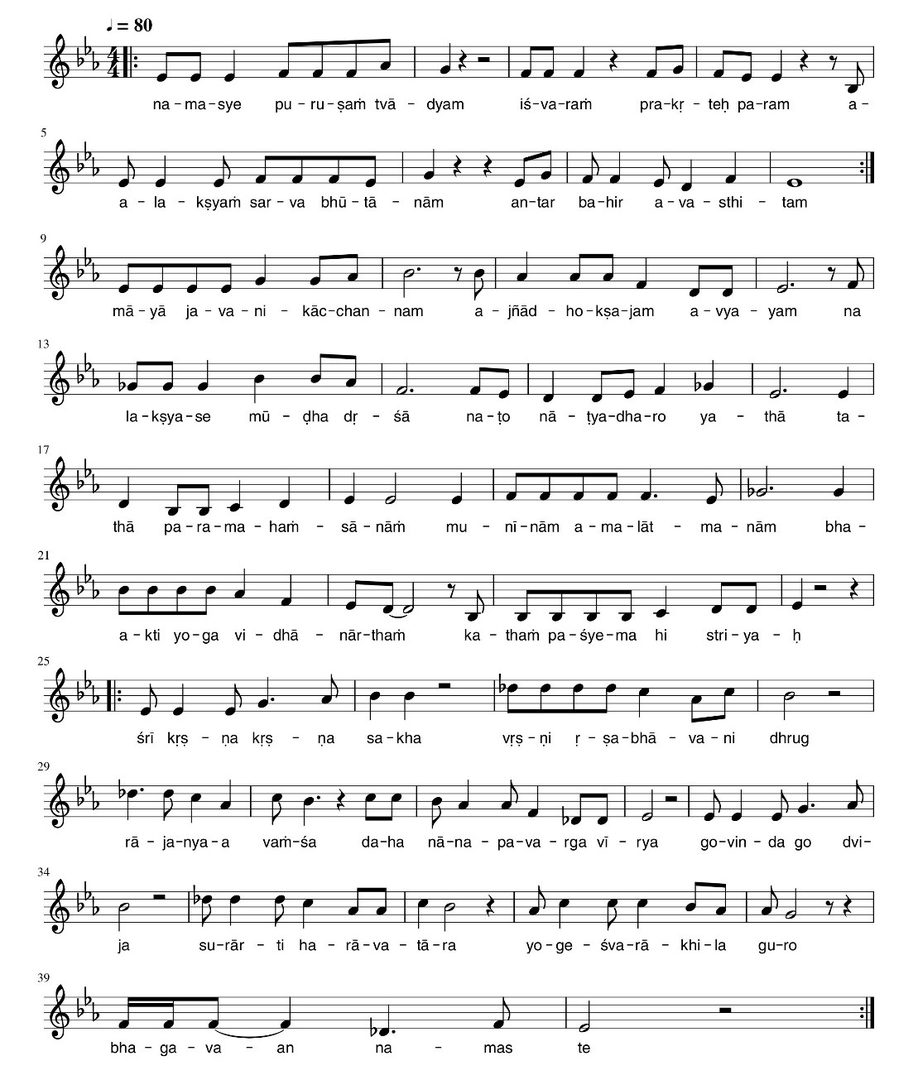
12 śrī-śuka uvāca namaḥ parasmai puruṣāya bhūyase
sad-udbhava-sthāna-nirodha-līlayā
gṛhīta-śakti-tritayāya dehinām antarbhavāyānupalakṣya-vartmane śrī-śukaḥ uvāca—Śrī Śukadeva Gosvāmī said; namaḥ—offering obeisances; parasmai—the Supreme; puruṣāya—Personality of Godhead; bhūyase—unto the complete whole; sad-udbhava—the creation of the material world; sthāna—its maintenance; nirodha—and its winding up; līlayā—by the pastime of; gṛhīta— having accepted; śakti—power; tritayāya—three modes; dehinām—of all who possess material bodies; antaḥ-bhavāya—unto Him who resides within; anupalakṣya—inconceivable; vartmane—one who has such ways.
Let me offer my respectful obeisances unto the Supreme Personality of Godhead, who, for the creation of the material world, accepts the three modes of nature. He is the complete whole residing within the body of everyone, and His ways are inconceivable.
13 bhūyo namaḥ sad-vṛjina-cchide 'satām
asambhavāyākhila-sattva-mūrtaye puṁsāṁ punaḥ pāramahaṁsya āśrame vyavasthitānām anumṛgya-dāśuṣe bhūyaḥ—again; namaḥ—my obeisances; sat—of the devotees or the pious; vṛjina—distresses; chide—the liberator; asatām—of the atheists, the nondevotee demons; asambhavāya—cessation of further unhappiness; akhila—complete; sattva—goodness; mūrtaye—unto the Personality; puṁsām—of the transcendentalists; punaḥ—again; pāramahaṁsye—the highest stage of spiritual perfection; āśrame—in the status; vyavasthitānām—particularly situated; anumṛgya—the destination; dāśuṣe—one who delivers.
I again offer my respectful obeisances unto the form of complete existence and transcendence, who is the liberator of the pious devotees from all distresses and the destroyer of the further advances in atheistic temperament of the nondevotee demons. For the transcendentalists who are situated in the topmost spiritual perfection, He grants their specific destinations.
14 namo namas te 'stv ṛṣabhāya sātvatāṁ
vidūra-kāṣṭhāya muhuḥ kuyoginām
nirasta-sāmyātiśayena rādhasā sva-dhāmani brahmaṇi raṁsyate namaḥ namaḥ namaḥ te—let me offer my obeisances unto You; astu—are; ṛṣabhāya— unto the great associate; sātvatām—of the members of the Yadu dynasty; vidūra- kāṣṭhāya—one who is far from mundane wranglers; muhuḥ—always; ku- yoginām—of the nondevotees; nirasta—vanquished; sāmya—equal status; atiśayena—by greatness; rādhasā—by opulence; sva-dhāmani—in His own abode; brahmaṇi—in the spiritual sky; raṁsyate—enjoys; namaḥ—I do bow down.
I again offer my respectful obeisances unto the form of complete existence and transcendence, who is the liberator of the pious devotees from all distresses and the destroyer of the further advances in atheistic temperament of the nondevotee demons. For the transcendentalists who are situated in the topmost spiritual perfection, He grants their specific destinations.
15 yat-kīrtanaṁ yat-smaraṇaṁ yad-īkṣaṇaṁ yad-vandanaṁ yac-chravaṇaṁ yad-arhaṇam lokasya sadyo vidhunoti kalmaṣaṁ tasmai subhadra-śravase namo namaḥ yat—whose; kīrtanam—glorification; yat—whose; smaraṇam—remembrances; yat—whose; īkṣaṇam—audience; yat—whose; vandanam—prayers; yat—whose; śravaṇam—hearing about; yat—whose; arhaṇam—worshiping; lokasya—of all people; sadyaḥ—forthwith; vidhunoti—specifically cleanses; kalmaṣam—effects of sins; tasmai—unto Him; subhadra—all-auspicious; śravase—one who is heard; namaḥ namaḥ—my due obeisances again and again.
Let me offer my respectful obeisances unto the all-auspicious Lord Śrī Kṛṣṇa, about whom glorification, remembrances, audience, prayers, hearing and worship can at once cleanse the effects of all sins of the performer.
16 vicakṣaṇā yac-caraṇopasādanāt saṅgaṁ vyudasyobhayato 'ntar-ātmanaḥ vindanti hi brahma-gatiṁ gata-klamās tasmai subhadra-śravase namo namaḥ vicakṣaṇāḥ—highly intellectual; yat—whose; caraṇa-upasādanāt—simply dedicating oneself unto the lotus feet; saṅgam—attachment; vyudasya—giving up completely; ubhayataḥ—for present and future existence; antaḥ-ātmanaḥ—of the heart and soul; vindanti—moves progressively; hi—certainly; brahma-gatim— toward spiritual existence; gata-klamāḥ—without difficulty; tasmai—unto Him; subhadra—all-auspicious; śravase—unto one who is heard; namaḥ namaḥ—my due obeisances again and again.
Let me offer my respectful obeisances again and again unto the all- auspicious Lord Śrī Kṛṣṇa. The highly intellectual, simply by surrendering unto His lotus feet, are relieved of all attachments to present and future existences and without difficulty progress toward spiritual existence.
17 tapasvino dāna-parā yaśasvino manasvino mantra-vidaḥ sumaṅgalāḥ kṣemaṁ na vindanti vinā yad-arpaṇaṁ tasmai subhadra-śravase namo namaḥ tapasvinaḥ—the great learned sages; dāna-parāḥ—the great performer of charity; yaśasvinaḥ—the great worker of distinction; manasvinaḥ—the great philosophers or mystics; mantra-vidaḥ—the great chanter of the Vedic hymns; su-maṅgalāḥ— strict followers of Vedic principles; kṣemam—fruitful result; na—never; vindanti— attain; vinā—without; yat-arpaṇam—dedication; tasmai—unto Him; subhadra— auspicious; śravase—hearing about Him; namaḥ namaḥ—my obeisances again and again.
Let me offer my respectful obeisances unto the all-auspicious Lord Śrī Kṛṣṇa again and again because the great learned sages, the great performers of charity, the great workers of distinction, the great philosophers and mystics, the great chanters of the Vedic hymns and the great followers of Vedic principles cannot achieve any fruitful result without dedication of such great qualities to the service of the Lord.
18 kirāta-hūṇāndhra-pulinda-pulkaśā ābhīra-śumbhā yavanāḥ khasādayaḥ ye 'nye ca pāpā yad-apāśrayāśrayāḥ śudhyanti prabhaviṣṇave namaḥ kirāta—a province of old Bhārata; hūṇa—part of Germany and Russia; āndhra—a province of southern India; pulinda—the Greeks; pulkaśāḥ—another province; ābhīra—part of old Sind; śumbhāḥ—another province; yavanāḥ—the Turks; khasa-ādayaḥ—the Mongolian province; ye—even those; anye—others; ca—also; pāpāḥ—addicted to sinful acts; yat—whose; apāśraya-āśrayāḥ—having taken shelter of the devotees of the Lord; śudhyanti—at once purified; tasmai—unto Him; prabhaviṣṇave—unto the powerful Viṣṇu; namaḥ—my respectful obeisances.
Kirātas, Hūṇas, Āndhras, Pulindas, Pulkaśas, Ābhīras, Śumbhas, Yavanas, members of the Khasa races and even others addicted to sinful acts can be purified by taking shelter of the devotees of the Lord, due to His being the supreme power. I beg to offer my respectful obeisances unto Him.
Commentary
The last verse is quoted by Śrīla Prabhupāda hundreds of times because it shows the supremely powerful mercy of the Lord and His devotees by dint of which even the most sinful people can be elevated to the status of pure devotees. Some of Prabhupāda’s quotes: Letter to Sumati Morarjee – New York, November 10, 1965 The organized method is like this. They should have association of bona fide devotees of the Lord, they should join the Kirtana glorifying the Lord, they should hear the teachings of Srimad-Bhagavatam, they should have intimate touch with the temple or place of the Lord and they should be given ample chance to worship the Lord in the temple. Under the guidance of a bona fide devotee they can be given such facilities and the way of Srimad-Bhagavatam is open for every one. Apart from civilized men like the Americans even the Kirata, Andhra, Pulinda, Pukkasa, Abhira, Sumbha, Yavana, Khasadaya or any other lower caste, all of them can be trained up to be devotees of the Lord under proper guidance of a pure and bona fide devotee. That is the instruction of Sukadeva Goswami imparted to Maharaja Pariksit.
Lecture on Bhagavad-gītā 7.3 – Bombay, March 29, 1971 Kirāta, hūṇa, āndhra, pulinda, pulkaśa. There are so many different names. Of course, if we research from history, from the world history, we can find out where there are. But there are varieties of human beings. Therefore Kṛṣṇa says, manuṣyāṇāṁ sahasreṣu. All human beings are not of the same standard. There are different standards. But Kṛṣṇa is so kind, Kṛṣṇa is so powerful, that anyone out of this human society can be claimed to become a Vaiṣṇava. Anyone. That is the statement of Śukadeva Gosvāmī: kirāta-huṇāndhra-pulinda-pulkaśā ābhīra- śumbhā yavanāḥ khasādayaḥ, ye 'nye ca pāpāḥ. These names are mentioned, but there are many others whose names are not mentioned. Ye 'nye ca pāpāḥ. They are called pāpāḥ. Pāpa means very sinful life. Yad-apāśrayāśrayāḥ. If such persons, such lower-grade persons even, they take shelter of a pure devotee, then they become purified. Śudhyanti, they become purified. How? Prabhaviṣṇave namaḥ. That is the special prerogative power of Lord Viṣṇu. He can deliver anyone in any condition of life. Prabhaviṣṇave namaḥ. That is extra, extraordinary, inconceivable power. Lecture on Śrīmad-Bhāgavatam 7.6.7 – Vṛndāvana, December 9, 1975 One who is inquisitive to understand Brahman –brahmeti paramātmeti bhagavān iti śabdyate– he should be given chance. Just like there is a little fire. Fan it. Fanning, fanning, fanning, and it becomes a big fire. So our process is that. Anyone, we pick up anyone, kirāta-hūṇāndhra-pulinda-pulkaśā, what to speak of the śūdra. Striyaḥ śūdrās tathā vaiśyaḥ. In the ordinary way the stri, woman, śūdra, the fourth- grade man, and vaiśya, they are taken together, not very intelligent. But Pāñcarātriki-vidhi offers facility even persons who are lower than these striya, śūdra, vaiśya. Kirāta-hūṇāndhra-pulinda-pulkaśā ābhīra-śumbhā yavanāḥ khasādayaḥ, ye 'nye ca pāpā. And less than that, ye 'nye ca pāpa yad- apāśrayāśrayāḥ... A devotee, a pure devotee of the Lord, and if these persons take shelter of a pure devotee of the Lord, then śudhyanti—they become purified by following the injunction of the spiritual master. He knows how to deal with them, how to elevate them to the brahminical position. So that is not artificial. Śāstra says, Bhāgavata says, "Yes. By such expert management these kirāta-hūṇāndhra, lower than the śūdras, śudhyanti..." Śudhyanti. Now, just like people protest because we are giving the position of a brāhmaṇa to the mlecchas, yavana. Yavanāḥ khasādayaḥ. Khasādayaḥ means Mongolians, the Chinese, Japanese and the Philippines. So they are khasādaya. The Manipuris, Assamese, they are considered as khasādaya. So there is no distinction. Caitanya Mahāprabhu has given open declaration: kṛṣṇa-bhajanete nāhi jāti kulādi vicāra. Anyone who is desirous of becoming Kṛṣṇa conscious, it is open. Anyone can come. By proper training by the expert spiritual master everyone can be raised to the brahminical platform and then Vaiṣṇava platform.
Prahlāda-śikṣa & stotra
SB 7.5.5, 30-32, 42-45
5 tat sādhu manye 'sura-varya dehināṁ sadā samudvigna-dhiyām asad-grahāt hitvātma-pātaṁ gṛham andha-kūpaṁ vanaṁ gato yad dharim āśrayeta śrī-prahlādaḥ uvāca—Prahlāda Mahārāja replied; tat—that; sādhu—very good, or the best part of life; manye—I think; asura-varya—O King of the asuras; dehinām—of persons who have accepted the material body; sadā—always; samudvigna—full of anxieties; dhiyām—whose intelligence; asat-grahāt—because of accepting the temporary body or bodily relations as real (thinking "I am this body, and everything belonging to this body is mine"); hitvā—giving up; ātma-pātam—the place where spiritual culture or self-realization is stopped; gṛham—the bodily concept of life, or household life; andha-kūpam—which is nothing but a blind well (where there is no water but one nonetheless searches for water); vanam—to the forest; gataḥ—going; yat—which; harim—the Supreme Personality of Godhead; āśrayeta—may take shelter of.
Prahlāda Mahārāja replied: O best of the asuras, King of the demons, as far as I have learned from my spiritual master, any person who has accepted a temporary body and temporary household life is certainly embarrassed by anxiety because of having fallen in a dark well where there is no water but only suffering. One should give up this position and go to the forest [vana]. More clearly, one should go to Vṛndāvana, where only Kṛṣṇa consciousness is prevalent, and should thus take shelter of the Supreme Personality of Godhead. (SB 7.5.5)
30 matir na kṛṣṇe parataḥ svato vā mitho 'bhipadyeta gṛha-vratānām adānta-gobhir viśatāṁ tamisraṁ punaḥ punaś carvita-carvaṇānām śrī-prahrādaḥ uvāca—Prahlāda Mahārāja said; matiḥ—inclination; na— never; kṛṣṇe—unto Lord Kṛṣṇa; parataḥ—from the instructions of others; svataḥ—from their own understanding; vā—either; mithaḥ—from combined effort; abhipadyeta—is developed; gṛha-vratānām—of persons too addicted to the materialistic, bodily conception of life; adānta— uncontrolled; gobhiḥ—by the senses; viśatām—entering; tamisram— hellish life; punaḥ—again; punaḥ—again; carvita—things already chewed; carvaṇānām—who are chewing.
Prahlāda Mahārāja replied: Because of their uncontrolled senses, persons too addicted to materialistic life make progress toward hellish conditions and repeatedly chew that which has already been chewed. Their inclinations toward Kṛṣṇa are never aroused, either by the instructions of others, by their own efforts, or by a combination of both. (SB 7.5.30)
31 na te viduḥ svārtha-gatiṁ hi viṣṇuṁ
durāśayā ye bahir-artha-māninaḥ andhā yathāndhair upanīyamānās te 'pīśa-tantryām uru-dāmni baddhāḥ na—not; te—they; viduḥ—know; sva-artha-gatim—the ultimate goal of life, or their own real interest; hi—indeed; viṣṇum—Lord Viṣṇu and His abode; durāśayāḥ—being ambitious to enjoy this material world; ye—who; bahiḥ— external sense objects; artha-māninaḥ—considering as valuable; andhāḥ— persons who are blind; yathā—just as; andhaiḥ—by other blind men; upanīyamānāḥ—being led; te—they; api—although; īśa-tantryām—to the ropes (laws) of material nature; uru—having very strong; dāmni—cords; baddhāḥ—bound.
Persons who are strongly entrapped by the consciousness of enjoying material life, and who have therefore accepted as their leader or guru a similar blind man attached to external sense objects, cannot understand that the goal of life is to return home, back to Godhead, and engage in the service of Lord Viṣṇu. As blind men guided by another blind man miss the right path and fall into a ditch, materially attached men led by another materially attached man are bound by the ropes of fruitive labor, which are made of very strong cords, and they continue again and again in materialistic life, suffering the threefold miseries. (SB 7.5.31)
32 naiṣāṁ matis tāvad urukramāṅghriṁ
spṛśaty anarthāpagamo yad-arthaḥ
mahīyasāṁ pāda-rajo 'bhiṣekaṁ
niṣkiñcanānāṁ na vṛṇīta yāvat
na—not; eṣām—of these; matiḥ—the consciousness; tāvat—that long; urukrama-aṅghrim—the lotus feet of the Supreme Personality of Godhead, who is famous for performing uncommon activities; spṛśati—does touch; anartha—of unwanted things; apagamaḥ—the disappearance; yat—of which; arthaḥ—the purpose; mahīyasām—of the great souls (the mahātmās, or devotees); pāda-rajaḥ—by the dust of the lotus feet; abhiṣekam—consecration; niṣkiñcanānām—of devotees who have nothing to do with this material world; na—not; vṛṇīta—may accept; yāvat—as long as.
Unless they smear upon their bodies the dust of the lotus feet of a Vaiṣṇava completely freed from material contamination, persons very much inclined toward materialistic life cannot be attached to the lotus feet of the Lord, who is glorified for His uncommon activities. Only by becoming Kṛṣṇa conscious and taking shelter at the lotus feet of the Lord in this way can one be freed from material contamination. (SB 7.5.32)
42 ko nv atra te 'khila-guro bhagavan prayāsa uttāraṇe 'sya bhava-sambhava-lopa-hetoḥ mūḍheṣu vai mahad-anugraha ārta-bandho kiṁ tena te priya-janān anusevatāṁ naḥ kaḥ—what is that; nu—indeed; atra—in this matter; te—of Your Lordship; akhila-guro—O supreme spiritual master of the entire creation; bhagavan— O Supreme Lord, O Personality of Godhead; prayāsaḥ—endeavor; uttāraṇe—for the deliverance of these fallen souls; asya—of this; bhava- sambhava—of creation and maintenance; lopa—and of annihilation; hetoḥ—of the cause; mūḍheṣu—unto the foolish persons rotting in this material world; vai—indeed; mahat-anugrahaḥ—compassion by the Supreme; ārta-bandho—O friend of the suffering living entities; kim—what is the difficulty; tena—with that; te—of Your Lordship; priya-janān—the dear persons (devotees); anusevatām—of those always engaged in serving; naḥ—like us (who are so engaged).
O my Lord, O Supreme Personality of Godhead, original spiritual master of the entire world, what is the difficulty for You, who manage the affairs of the universe, in delivering the fallen souls engaged in Your devotional service? You are the friend of all suffering humanity, and for great personalities it is necessary to show mercy to the foolish. Therefore I think that You will show Your causeless mercy to persons like us, who engage in Your service. (SB 7.9.42)
43 naivodvije para duratyaya-vaitaraṇyās tvad-vīrya-gāyana-mahāmṛta-magna-cittaḥ śoce tato vimukha-cetasa indriyārtha- māyā-sukhāya bharam udvahato vimūḍhān na—not; eva—certainly; udvije—I am disturbed or afraid; para—O Supreme; duratyaya—insurmountable or very difficult to cross; vaitaraṇyāḥ—of the Vaitaraṇī, the river of the material world; tvat-vīrya—of Your Lordship's glories and activities; gāyana—from chanting or distributing; mahā-amṛta—in the great ocean of nectarean spiritual bliss; magna-cittaḥ—whose consciousness is absorbed; śoce—I am simply lamenting; tataḥ—from that; vimukha-cetasaḥ—the fools and rascals who are bereft of Kṛṣṇa consciousness; indriya-artha—in sense gratification; māyā-sukhāya—for temporary, illusory happiness; bharam—the false burden or responsibility (of maintaining one's family, society and nation and elaborate arrangements for that purpose); udvahataḥ—who are lifting (by making grand plans for this arrangement); vimūḍhān—although all of them are nothing but fools and rascals (I am thinking of them also).
O best of the great personalities, I am not at all afraid of material existence, for wherever I stay I am fully absorbed in thoughts of Your glories and activities. My concern is only for the fools and rascals who are making elaborate plans for material happiness and maintaining their families, societies and countries. I am simply concerned with love for them. (SB 7.9.43)
44 prāyeṇa deva munayaḥ sva-vimukti-kāmā maunaṁ caranti vijane na parārtha-niṣṭhāḥ naitān vihāya kṛpaṇān vimumukṣa eko nānyaṁ tvad asya śaraṇaṁ bhramato 'nupaśye prāyeṇa—generally, in almost all cases; deva—O my Lord; munayaḥ—the great saintly persons; sva—personal, own; vimukti-kāmāḥ—ambitious for liberation from this material world; maunam—silently; caranti—they wander (in places like the Himalayan forests, where they have no touch with the activities of the materialists); vijane—in solitary places; na—not; para- artha-niṣṭhāḥ—interested in working for others by giving them the benefit of the Kṛṣṇa consciousness movement, by enlightening them with Kṛṣṇa consciousness; na—not; etān—these; vihāya—leaving aside; kṛpaṇān— fools and rascals (engaged in materialistic activity who do not know the benefit of the human form of life); vimumukṣe—I desire to be liberated and to return home, back to Godhead; ekaḥ—alone; na—not; anyam—other; tvat—but for You; asya—of this; śaraṇam—shelter; bhramataḥ—of the living entity rotating and wandering throughout the material universes; anupaśye—do I see.
My dear Lord Nṛsiṁhadeva, I see that there are many saintly persons indeed, but they are interested only in their own deliverance. Not caring for the big cities and towns, they go to the Himalayas or the forest to meditate with vows of silence [mauna-vrata]. They are not interested in delivering others. As for me, however, I do not wish to be liberated alone, leaving aside all these poor fools and rascals. I know that without Kṛṣṇa consciousness, without taking shelter of Your lotus feet, one cannot be happy. Therefore I wish to bring them back to shelter at Your lotus feet. (SB 7.9.44)
45 yan maithunādi-gṛhamedhi-sukhaṁ hi tucchaṁ
kaṇḍūyanena karayor iva duḥkha-duḥkham
tṛpyanti neha kṛpaṇā bahu-duḥkha-bhājaḥ
kaṇḍūtivan manasijaṁ viṣaheta dhīraḥ
yat—that which (is meant for material sense gratification); maithuna-ādi— represented by talking of sex, reading sexual literature or enjoying sex life (at home or outside, as in a club); gṛhamedhi-sukham—all types of material happiness based on attachment to family, society, friendship, etc.; hi— indeed; tuccham—insignificant; kaṇḍūyanena—with the itching; karayoḥ— of the two hands (to relieve the itching); iva—like; duḥkha-duḥkham— different types of unhappiness (into which one is put after such itching sense gratification); tṛpyanti—become satisfied; na—never; iha—in material sense gratification; kṛpaṇāḥ—the foolish persons; bahu-duḥkha-bhājaḥ— subjected to various types of material unhappiness; kaṇḍūti-vat—if one can learn from such itching; manasi-jam—which is simply a mental concoction (actually there is no happiness); viṣaheta—and tolerates (such itching); dhīraḥ—(he can become) a most perfect, sober person.
Sex life is compared to the rubbing of two hands to relieve an itch. Gṛhamedhīs, so-called gṛhasthas who have no spiritual knowledge, think that this itching is the greatest platform of happiness, although actually it is a source of distress. The kṛpaṇas, the fools who are just the opposite of brāhmaṇas, are not satisfied by repeated sensuous enjoyment. Those who are dhīra, however, who are sober and who tolerate this itching, are not subjected to the sufferings of fools and rascals. (SB 7.9.45)
Commentary
The teachings and prayers of Prahlāda Mahārāja are among the verses most frequently quoted by Śrīla Prabhupāda. During his first visit to England in 1969, Prabhupāda met with George Harrison, John Lennon and Yoko Ono, and he tried to inspire them to use their musical talent and fame to serve the mission of Śrī Caitanya Mahāprabhu by composing Kṛṣṇa conscious songs. During the conversation, Prabhupāda explained about Vedic hymns and then began to sing a capella Prahlāda Mahārāja’s “teachings” to his father Hiraṇyakaśipu. In Sacred Song Symphony we have included these four verses and another four from the prayers of Prahlāda to Nṛsiṁhadeva after the Lord had killed Hiraṇyakaśipu. Again, the tune is based on Prabhupāda’s singing. Below you will find quotes for each of the eight verses. SB 7.5.5 Lecture on Śrī Caitanya-caritāmṛta, Ādi-līlā 1.8 – Mayapur, April 1, 1975 This world is the place of anxiety, kuṇṭha. Prahlāda Mahārāja pointed it out that tat sādhu manye 'sura-varya dehināṁ sadā samudvigna-dhiyām asad- grahāt. Here, in this material world, whoever –Brahmā also– is full of anxiety. […] So everyone is full of anxiety in this material world, māyā. So our Kṛṣṇa consciousness movement is to take a person from this māyā to
Vaikuṇṭha. That is the Kṛṣṇa consciousness movement, to save the living entity from anxiety and bring him to the platform of no anxiety. That is the difference, from anxiety to no anxiety. That is the greatest gift to the human society. Everyone is full of anxiety because we are in this material world. We must be full of anxiety. So here the information is given, māyātīte vyāpi- vaikuṇṭha-loke: "There is another atmosphere, another nature, where there is no anxiety.” […] So Kṛṣṇa consciousness movement is the only endeavor where, by becoming Kṛṣṇa conscious you become transferred from māyā to Vaikuṇṭha. SB 7.5.30-31 Śrī Caitanya-caritāmṛta, Madhya-līlā 12.184 – Purport As Śrīla Bhaktisiddhānta Sarasvatī Ṭhākura explains, the word bahirmukha refers to a person who is very busy tasting material enjoyment. Such a person always poses himself as an enjoyer of the external energy of the Supreme Personality of Godhead. Being attracted by external opulence, the nondevotee always forgets his intimate relationship with Kṛṣṇa. Such a person does not like the idea of becoming Kṛṣṇa conscious. This is explained by Śrīla Prahlāda Mahārāja in Śrīmad-Bhāgavatam (7.5.30-31): matir na kṛṣṇe parataḥ svato vā… Materialists always remain blind because they are always guided by blind rascals. A materialistic person considers himself free to act as he likes. He does not know that he is rigidly controlled by the stringent laws of nature, nor does he know that he has to transmigrate from one body to another and perpetually rot in material existence. Such rascals and foolish people are lured by the prayers of their foolish leaders for sense gratification, and they cannot understand what is meant by Kṛṣṇa consciousness. The material world exists outside the spiritual sky, and a foolish materialist cannot estimate the extent of this material sky. What, then, can he know of the spiritual sky? Materialists simply believe their imperfect senses and do not take instructions from the revealed scriptures. According to Vedic civilization, one has to see through the authority of the revealed scriptures. Śāstra-cakṣuḥ: one should see everything through the medium of the Vedic literature. In this way, one can distinguish between the spiritual world and material world. Those who ignore such instructions cannot be convinced of the existence of the spiritual world. Because they have forgotten their spiritual identity, such materialists take this material world as the all in all. They are therefore called bahirmukha.
SB 7.5.32 Lecture on Bhagavad-gītā 2.22 – Hyderabad, November 26, 1972 It is said in the Brahma-saṁhitā: vedeṣu durlabham adurlabham ātma- bhaktau. Vedeṣu. If you simply study Vedas, although the ultimate goal of studying Veda is to know Kṛṣṇa, but if you want to study Vedas by your own speculative process, then He'll always remain rare. Vedeṣu durlabham adurlabham ātma-bhaktau. But if you approach a devotee of the Lord, he can deliver. He can deliver. Mahīyasāṁ pāda-rajo-'bhiṣekaṁ niṣkiñcanānāṁ na vṛṇīta yāvat, naiṣāṁ matis tāvad urukramāṅghrim. Prahlāda Mahārāja says that "You cannot have Kṛṣṇa consciousness..." Naiṣāṁ matis tāvad urukramāṅghrim. Kṛṣṇa consciousness is not so easy. You cannot have it unless you surrender yourself. Niṣkiñcanānām, mahīyasāṁ pāda-rajo-'bhiṣekaṁ niṣkiñcanānāṁ na vṛṇīta yāvat. So long you do not take the dust of the lotus feet of a devotee, niṣkiñcanānām, who has nothing to do with this material world—he's simply concerned with the service of the Lord—unless you are in touch with such a person, it is not possible to attain Kṛṣṇa consciousness. SB 7.9.42 Lecture on Śrīmad-Bhāgavatam 7.9.42 – Mayapur, March 22, 1976 So here, ko nu atra te akhila-guro bhagavan prayāsa. Everyone requires some extra endeavor to favor us, but Kṛṣṇa does not require. That is Kṛṣṇa. He can do anything He likes. He does not depend on others. Others depend on Kṛṣṇa's sanction, but Kṛṣṇa does not require anyone's sanction. […] It is not at all possible to become independent of Kṛṣṇa's will. That is not possible. Therefore those who are trying to work independently, without Kṛṣṇa's favor, they're mūḍha, all rascals. They will not accept what Kṛṣṇa says, and they are trying to establish some law without Kṛṣṇa. "There is no need of God." Most scientists, they say like that. "Now we have got science. We can do everything." They are mūḍhas. It is not possible. Independently you cannot do without Kṛṣṇa's favor. So best thing is that always try to seek favor of Kṛṣṇa. And you cannot seek Kṛṣṇa's favor directly. That is also another point. Kiṁ tena te priya-janān anusevatāṁ naḥ. You cannot jump over to Kṛṣṇa without the favor of His devotee. Yasya prasādād bhagavat-prasādaḥ. You cannot seek favor of Bhagavān directly. That is another foolishness. You must go through the servant of Kṛṣṇa. Gopī-bhartur pada-kamalayor dāsa-dāsa-dāsānudāsaḥ. This is our process. We don't approach Kṛṣṇa directly. We must begin our service to the Kṛṣṇa's servant. And who is Kṛṣṇa's servant? One who has become the servant of another Kṛṣṇa's servant. This is called dāsa- dāsānudāsa. Nobody can be independently servant of Kṛṣṇa. That is another foolishness. Kṛṣṇa never accepts anyone's service directly. No. That is not possible. You must come through the servant of the servant. This is called paramparā system. SB 7.9.43 Lecture on Śrīmad-Bhāgavatam 1.7.47-48 – Vṛndāvana, October 6, 1976 If you become situated in Kṛṣṇa consciousness, then you'll be so satisfied that in any circumstances nobody will be able to give you any trouble. This is Vaiṣṇava. Yayātmā suprasīdati. Ātmā, brahma-bhūtaḥ prasannātmā na śocati na kāṅkṣati. There is no question of lamenting. But still, a Vaiṣṇava laments not for his own purpose. Just like Prahlāda Mahārāja says that na udvije para. Kṛṣṇa is para. Nṛsiṁhadeva is para, the Supreme. "O the Supreme, I am not at all disturbed." Naivodvije para duratyaya-vaitaraṇyāḥ. Why? Tvad-vīrya-gāyana-mahāmṛta-magna-cittaḥ. "Because by the grace of Nārada Muni I have learned this art, how to chant Your holy name. That I have learned." Tvad-vīrya-gāyana. "I learned or not learned, but whenever I chant, then I merge into the ocean of nectarean." […] A Vaiṣṇava has personally no distress. Anywhere he can sit down and chant Hare Kṛṣṇa and read Śrīmad-Bhāgavatam. And where is his difficulty? Tvad-vīrya-gāyana-mahāmṛta-magna-cittaḥ. He has no. But why he takes so much distress? Śoce tato vimukha-cetasaḥ. Prahlāda Mahārāja says, "I am aggrieved for the rascals who are not devotees." Vimukha means they are not interested in Kṛṣṇa consciousness. So a Vaiṣṇava is disturbed, perturbed. How these rascals are suffering so much in material condition. So how to teach them Kṛṣṇa consciousness. How to make them happy. This is Vaiṣṇava's concern. SB 7.9.44 Lecture on Śrīmad-Bhāgavatam 6.1.6-8 – New York, July 21, 1971 Prahlāda Mahārāja says, prāyeṇa deva munayaḥ sva-vimukti-kāmā: "My dear Lord, there are many saintly persons, sages, they are very much interested in their own liberation." Sva-vimukti-kāmā. And maunaṁ caranti vijane na parārtha-niṣṭhāḥ: "They try to live in solitary place, in Himalaya Mountain, maunam, not talk to anyone, caranti..." Because they are always afraid that "If I mix with these ordinary people in the cities, I may be disturbed, I may fall down. Better let me save myself first of all." So Prahlāda
Mahārāja is regretting that these great saintly persons, they do not come in the city where they have manufactured a civilization, all day and night working hard. "But I am anxious for them." This is Prahlāda Mahārāja's philosophy. Maunaṁ caranti vijane parārtha-niṣṭhāḥ, na parartha niṣṭhāḥ: "They are not very much compassionate with these fallen people who are unnecessarily working so hard simply for sense gratification." If there is some substance in that working hard, no, they do not know what is the substance. And at most they know sex. That's all. Working so hard day and night. And what is satisfaction? Either naked dance, go to the naked club or this or that. That's all. But Prahlāda Mahārāja says, naitān vihāya kṛpaṇān vimumukṣa ekaḥ: "My Lord, I do not require salvation alone. Unless I take all these fools with me, I'll not go." He refuses to go the kingdom of God without taking all these fallen souls. Just see. This is Vaiṣṇava. He says, naitān vihāya kṛpaṇān vimumukṣa ekaḥ: "Then what is your process? You are very ambitious. That's all right. You want to take all of them with you to the kingdom of God, but what process?" People may ask, "How you are going to do that?" He says, nānyam tvad asya-śaraṇaṁ bhramato 'nupaśye: "I simply want to teach them how to surrender unto You. That's all. Very simple method. As soon as you bow down before Kṛṣṇa with faith: "My Lord, Kṛṣṇa, I was forgetful of Yourself so long, so many lives. Now I have come to consciousness. Please accept me." That's all. If people simply learn this technique and sincerely surrender to the Lord, the path is immediately open. SB 7.9.45 Lecture on Bhagavad-gītā 2.9 – London, August 15, 1973 In the material world, there cannot be possibility of love. It is not possible. The so-called love is cheating, cheating only. "I love you. I love you because you are beautiful. It will satisfy my senses. Because you are young, it will satisfy my senses." This is the world. Material world means this. Puṁsaḥ striyā maithunī-bhāvam etat. The whole basic principle of this material world is sense gratification. Yan maithunādi-gṛhamedhi-sukhaṁ hi tucchaṁ kaṇḍūyanena karayor iva duḥkha-duḥkham. This material world, so-called love, society, friendship and love—everything is depending on that sense gratification, maithunādi, beginning from sex. So when one becomes free from this maithunādi-sukham, he is liberated, he is liberated, svāmī, gosvāmī. So long one is attached to this maithunādi, sex impulse, he is neither svāmī nor gosvāmī. Svāmī means when one becomes master of the senses. As Kṛṣṇa is the master of senses, so when one becomes Kṛṣṇa conscious, he becomes master of the senses. It is not that senses should be stopped. No. It should be controlled. "When I require, I shall use it; otherwise not." That is master of senses. "I shall not act impelled by the senses. Senses should act under my direction." That is svāmī.
Brahmā-stotra
SB 10.14.1-40
3 jñāne prayāsam udapāsya namanta eva jīvanti san-mukharitāṁ bhavadīya-vārtām sthāne sthitāḥ śruti-gatāṁ tanu-vāṅ-manobhir ye prāyaśo 'jita jito 'py asi tais tri-lokyām jñāne—for knowledge; prayāsam—the endeavor; udapāsya—giving up completely; namantaḥ—offering obeisances; eva—simply; jīvanti—live; sat-mukharitām—chanted by the pure devotees; bhavadīya-vārtām— topics related to You; sthāne—in their material position; sthitāḥ—remaining; śruti-gatām—received by hearing; tanu—with their body; vāk—words; manobhiḥ—and mind; ye—who; prāyaśaḥ—for the most part; ajita—O unconquerable one; jitaḥ—conquered; api—nevertheless; asi—You become; taiḥ—by them; tri-lokyām—within the three worlds.
Those who, even while remaining situated in their established social positions, throw away the process of speculative knowledge and with their body, words and mind offer all respects to descriptions of Your personality and activities, dedicating their lives to these narrations, which are vibrated by You personally and by Your pure devotees, certainly conquer Your Lordship, although You are otherwise unconquerable by anyone within the three worlds.
4 śreyaḥ-sṛtiṁ bhaktim udasya te vibho
kliśyanti ye kevala-bodha-labdhaye
teṣām asau kleśala eva śiṣyate nānyad yathā sthūla-tuṣāvaghātinām śreyaḥ—of supreme benefit; sṛtim—the path; bhaktim—devotional service; udasya—rejecting; te—they; vibho—O almighty Lord; kliśyanti—struggle;
ye—who; kevala—exclusive; bodha—of knowledge; labdhaye—for the achievement; teṣām—for them; asau—this; kleśalaḥ—botheration; eva— merely; śiṣyate—remains; na—nothing; anyat—other; yathā—just as; sthūla-tuṣa—empty husks; avaghātinām—for those who are beating.
My dear Lord, devotional service unto You is the best path for self- realization. If someone gives up that path and engages in the cultivation of speculative knowledge, he will simply undergo a troublesome process and will not achieve his desired result. As a person who beats an empty husk of wheat cannot get grain, one who simply speculates cannot achieve self-realization. His only gain is trouble.
7 guṇātmanas te 'pi guṇān vimātuṁ
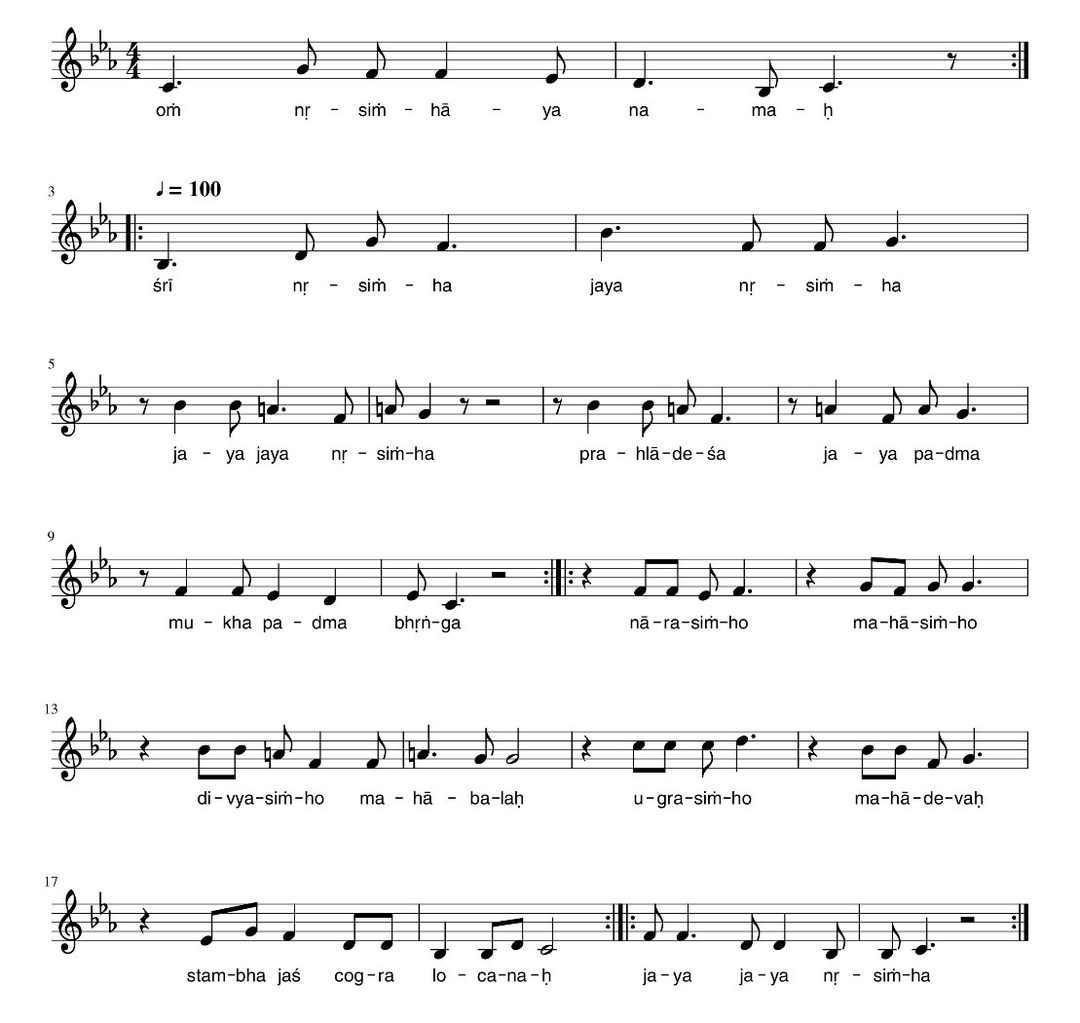
hitāvatīṛnasya ka īśire 'sya kālena yair vā vimitāḥ su-kalpair bhū-pāṁśavaḥ khe mihikā dyu-bhāsaḥ guṇa-ātmanaḥ—of the possessor of all superior qualities; te—You; api— certainly; guṇān—the qualities; vimātum—to count; hita-avatīrṇasya—who have descended for the benefit of all living entities; ke—who; īśire—are able; asya—of the universe; kālena—in due course of time; yaiḥ—by whom; vā—or; vimitāḥ—counted; su-kalpaiḥ—by great scientists; bhū- pāṁśavaḥ—the atoms of an earthly planet; khe—in the sky; mihikāḥ—the particles of snow; dyu-bhāsaḥ—the illumination of stars and planets.
In time, learned philosophers or scientists might be able to count all the atoms of the earth, the particles of snow, or perhaps even the shining molecules radiating from the sun, the stars and other luminaries. But among these learned men, who could possibly count the unlimited transcendental qualities possessed by You, the Supreme Personality of Godhead, who have descended onto the surface of the earth for the benefit of all living entities?
8 tat te 'nukampāṁ su-samīkṣamāṇo
bhuñjāna evātma-kṛtaṁ vipākam hṛd-vāg-vapurbhir vidadhan namas te jīveta yo mukti-pade sa dāya-bhāk tat—therefore; te—Your; anukampām—compassion; su-samīkṣamāṇaḥ— earnestly hoping for; bhuñjānaḥ—enduring; eva—certainly; ātma-kṛtam— done by himself; vipākam—the fruitive results; hṛt—with his heart; vāk— words; vapurbhiḥ—and body; vidadhan—offering; namaḥ—obeisances; te—unto You; jīveta—lives; yaḥ—anyone who; mukti-pade—to the position of liberation; saḥ—he; dāya-bhāk—the rightful heir.
My dear Lord, one who earnestly waits for You to bestow Your causeless mercy upon him, all the while patiently suffering the reactions of his past misdeeds and offering You respectful obeisances with his heart, words and body, is surely eligible for liberation, for it has become his rightful claim.
14 nārāyaṇas tvaṁ na hi sarva-dehinām
ātmāsy adhīśākhila-loka-sākṣī nārāyaṇo 'ṅgaṁ nara-bhū-jalāyanāt tac cāpi satyaṁ na tavaiva māyā nārāyaṇaḥ—the Supreme Lord Nārāyaṇa; tvam—You; na—not; hi— whether; sarva—of all; dehinām—embodied living beings; ātmā—the Supersoul; asi—You are; adhīśa—O supreme controller; akhila—of all; loka—planets; sākṣī—the witness; nārāyaṇaḥ—Lord Śrī Nārāyaṇa; aṅgam—the expanded plenary portion; nara—from the Supreme Personality; bhū—originating; jala—of the water; ayanāt—because of being the manifesting source; tat—that (expansion); ca—and; api—indeed; satyam—true; na—not; tava—Your; eva—at all; māyā—illusory energy.
Are You not the original Nārāyaṇa, O supreme controller, since You are the Soul of every embodied being and the eternal witness of all created realms? Indeed, Lord Nārāyaṇa is Your expansion, and He is called Nārāyaṇa because He is the generating source of the primeval water of the universe. He is real, not a product of Your illusory Māyā.
29 athāpi te deva padāmbuja-dvaya-
prasāda-leśānugṛhīta eva hi jānāti tattvaṁ bhagavan-mahimno na cānya eko 'pi ciraṁ vicinvan atha—therefore; api—indeed; te—Your; deva—my Lord; pada-ambuja- dvaya—of the two lotus feet; prasāda—of the mercy; leśa—by only a trace; anugṛhītaḥ—favored; eva—certainly; hi—indeed; jānāti—one knows; tattvam—the truth; bhagavat—of the Supreme Personality of Godhead; mahimnaḥ—of the greatness; na—never; ca—and; anyaḥ—another; ekaḥ—one; api—although; ciram—for a long period; vicinvan— speculating.
My Lord, if one is favored by even a slight trace of the mercy of Your lotus feet, he can understand the greatness of Your personality. But those who speculate to understand the Supreme Personality of Godhead are unable to know You, even though they continue to study the Vedas for many years.
30 tad astu me nātha sa bhūri-bhāgo bhave 'tra vānyatra tu vā tiraścām yenāham eko 'pi bhavaj-janānāṁ bhūtvā niṣeve tava pāda-pallavam tat—therefore; astu—may it be; me—my; nātha—O master; saḥ—that; bhūri-bhāgaḥ—greatest good fortune; bhave—in the birth; atra—this; vā— or; anyatra—in some other birth; tu—indeed; vā—or; tiraścām—among the animals; yena—by which; aham—I; ekaḥ—one; api—even; bhavat—or Your; janānām—devotees; bhūtvā—becoming; niṣeve—I may fully engage in serving; tava—Your; pāda-pallavam—lotus feet.
My dear Lord, I therefore pray to be so fortunate that in this life as Lord Brahmā or in another life, wherever I take my birth, I may be counted as one of Your devotees. I pray that wherever I may be, even among the animal species, I can engage in devotional service to Your lotus feet.
40 śrī-kṛṣṇa vṛṣṇi-kula-puṣkara-joṣa-dāyin kṣmā-nirjara-dvija-paśūdadhi-vṛddhi-kārin uddharma-śārvara-hara kṣiti-rākṣasa-dhrug ā-kalpam ārkam arhan bhagavan namas te śrī-kṛṣṇa—O Lord Kṛṣṇa; vṛṣṇi-kula—of the Yadu dynasty; puṣkara—to the lotus; joṣa—pleasure; dāyin—O You who bestow; kṣmā—of the earth;
nirjara—the demigods; dvija—the brāhmaṇas; paśu—and of the animals; udadhi—of the great oceans; vṛddhi—the increase; kārin—O You who cause; uddharma—of atheistic principles; śārvara—of the darkness; hara—O dispeller; kṣiti—upon the earth; rākṣasa—of the demons; dhruk— the opponent; ā-kalpam—until the end of the universe; ā-arkam—as long as the sun shines; arhan—O supremely worshipable Deity; bhagavan—O Supreme Personality of Godhead; namaḥ—I offer my respectful obeisances; te—unto You.
My dear Śrī Kṛṣṇa, You bestow happiness upon the lotuslike Vṛṣṇi dynasty and expand the great oceans consisting of the earth, the demigods, the brāhmaṇas and the cows. You dispel the dense darkness of irreligion and oppose the demons who have appeared on this earth. O Supreme Personality of Godhead, as long as this universe exists and as long as the sun shines, I will offer my obeisances unto You.
Commentary
This is a selection of eight verses from Brahmā’s prayers to Kṛṣṇa as found in Chapter 14 of the Tenth Canto of Śrīmad-Bhāgavatam. The first six were quoted many times by Śrīla Prabhupāda. Here are some examples.
SB 10.14.3 Lecture on Bhagavad-gītā 7.8-14 — New York, October 2, 1966 The purport of this verse is that jñāne prayāsam udapāsya: "One should give up his unnecessary endeavor for philosophical speculation about God." One should give it up, jñāne prayāsam, because by speculation you cannot reach to the ultimate truth. Especially for understanding God, or God consciousness, speculation is useless. Namanta eva: "You just become submissive." Just become submissive, that "What I am? I am insignificant creature in this universe." This world, this earth, is an insignificant point in the universe. And within this earth, the America is a small spot. And within America, this New York City is another small spot. And in this New York City, I am there. So what is my importance? So we should understand that we are very insignificant in comparison to the creation of the whole cosmic situation and God. So we should be very submissive. We should understand our position. […] "All right, let me become submissive. Then next?" San-mukharitāṁ bhavadīya-vārtām: "Just hear the message of God." The message of God is just like Bhagavad-gītā or Bible, any, as you like. Just try to hear, san- mukharitāṁ vārtām, from realized soul. Just like the truths of Bible were spoken by Lord Jesus Christ or Kṛṣṇa. Any, whatever you like, you hear. But you must hear about the Supreme Personality of Godhead and nothing more. That should be your profession. Then what will be the result? The result will be sthāne sthitāḥ. In whatever condition you are, that doesn't matter. "Oh, I am a very poor man." That doesn't matter. "Oh, I am a very rich man." That doesn't matter. "Oh, I am European." It doesn't matter. "I am Indian." Doesn't matter. "I am born very low." Oh, doesn't matter. Anything, unconditional. You remain whatever you are; that doesn't matter. If you simply hear, sthāne sthitāḥ śruti-gatām, if you simply give your aural reception to these transcendental words, the result will be that God, who can never be conquered, you'll conquer God. How you conquer? You will conquer by love. God cannot be conquered, but He can be conquered by love.
SB 10.14.4 Śrīmad-Bhāgavatam 2.4.16 – Purport Bhakti-yoga is the highest quality of perfection to be achieved by the intelligent person in lieu of performing a large quantity of spiritual activities. The example cited here is very appropriate. A handful of real paddy is more valuable than heaps of paddy skins without any substance within. Similarly, one should not be attracted by the jugglery of karma-kāṇḍa or jñāna-kāṇḍa or even the gymnastic performances of yoga, but skillfully should take to the simple performances of kīrtanam, smaraṇam, etc., under a bona fide spiritual master, and without any difficulty attain the highest perfection. SB 10.14.7 Teachings of Lord Caitanya, Chapter 9 When Lord Kṛṣṇa was within this universe, Brahmā played a trick on Him in order to confirm that the cowherd boy in Vṛndāvana was actually Kṛṣṇa Himself. By his mystic power, Brahmā stole all the cows, calves and cowherd friends of Kṛṣṇa and hid them. However, when he returned to see what Kṛṣṇa was doing alone, he saw that Kṛṣṇa was still playing with the same cows, calves and cowherd boys. In other words, by His Vaikuṇṭha potency, Lord Kṛṣṇa had expanded all the stolen cows, calves and friends. Indeed, Brahmā saw millions and billions of them, and he also saw millions and billions of tons of sugarcane and fruit, lotus flowers and horns. The cowherd boys were decorated with various clothes and ornaments, and no one could count their vast numbers. Indeed, Brahmā saw that each of the cowherd boys had become a four-handed Nārāyaṇa like the predominating Deity of each brahmāṇḍa, and he also saw that innumerable Brahmās were engaged in offering obeisances to the Lord. He saw that all of them were emanating from the body of Kṛṣṇa and, after a second, also entering into His body. Lord Brahmā became struck with wonder and in his prayer admitted that although anyone and everyone could say that they knew about Kṛṣṇa, as far as he was concerned, he did not know anything about Him. "My dear Lord," he said, "the potencies and opulences which You have exhibited just now are beyond the ability of my mind to understand."
SB 10.14.8 Lecture on Śrīmad-Bhāgavatam 7.9.1 – Mayapur, February 8, 1976 Kṛṣṇa, the Supreme Personality of Godhead, if He is pleased upon somebody, nobody can annihilate him. Similarly, if He is angry upon somebody, nobody can protect him. There is a Bengali saying, rākhe kṛṣṇa māre ke, māre kṛṣṇa rākhe ke. […] The devotees can understand that even sometimes we meet very reverse condition of life, it is also favor. Tat te 'nukampāṁ su-samīkṣamāṇaḥ. Anyone who can see that this unfavorable condition of life is also another favor of Kṛṣṇa... Tat te 'nukampāṁ su- samīkṣamāṇaḥ. "Even there is some suffering, it is not given by Kṛṣṇa. I am suffering on account of my past misdeeds, and Kṛṣṇa is so kind that I would have suffered many hundred thousand times more than the present suffering, but Kṛṣṇa is adjusting the whole thing by little suffering." This is the vision of devotee. Ātma-kṛtaṁ vipākam. A devotee never accuses Kṛṣṇa that "Kṛṣṇa, I am serving You so nicely, and You are giving me so much suffering?" No. This is not devotee's view. Devotee will take that "This so- called suffering is also Kṛṣṇa's favor." SB 10.14.14 Śrīmad-Bhāgavatam 10.13.53 – Purport "A person who considers demigods like Brahmā and Śiva to be on an equal level with Nārāyaṇa must certainly be considered an offender." No one can compare to Nārāyaṇa, or Kṛṣṇa. Kṛṣṇa is Nārāyaṇa, and Nārāyaṇa is also Kṛṣṇa, for Kṛṣṇa is the original Nārāyaṇa. Brahmā himself addressed Kṛṣṇa, nārāyaṇas tvaṁ na hi sarva-dehinām: "You are also Nārāyaṇa. Indeed, You are the original Nārāyaṇa."
SB 10.14.29 Lecture on Bhagavad-gītā 7.1 – Melbourne, June 29, 1974 Those who are philosophers, speculating what is God, what is the Absolute Truth, they cannot know. That is stated in the Śrīmad-Bhāgavatam. One who has gotten a little favor of Kṛṣṇa, God, he can understand. Athāpi te deva padāmbuja-dvaya-prasāda-leśa, little mercy, jānāti tattvam, he can understand what is God. Little favor; not all favor, a little. Others, ciraṁ vicinvan, they may go on speculating, imagining what is God, "God may be like this," "God may be like that," "God may be like that." So in that way, ciraṁ vicinvan, for many, many millions of years, if one thinks like that, he cannot understand. Therefore, Kṛṣṇa comes Himself, and He manifests His pastimes in Vṛndāvana as cowherd boy—how He is playing with His friends, how He is dealing with Rādhārāṇī, how He is dealing with His parents — everything is manifested practically just like ordinary human being. But at the same time, whenever there is need, big, big demons, beginning from Pūtanā, when He was only a few months old, He is maintaining His position as God. SB 10.14.30 In this verse Brahmā is praying for the the good fortune to be able to engage in devotional service under any circumstance, even if put into a non-human body where generally the opportunity to serve the Lord is lost. In this regard, Śrīla Prabhupāda writes in the Śrī Caitanya-caritāmṛta (Antya 1.24): “As will be evident from the following verses, the dog got the mercy of Śrī Caitanya Mahāprabhu and was immediately promoted to Vaikuṇṭha to become an eternal devotee. Śrīla Bhaktivinoda Ṭhākura has therefore sung, tumi ta’ ṭhākura, tomāra kukkura, baliyā jānaha more (Śaraṇāgati 19). He thus offers to become the dog of a Vaiṣṇava. There are many other instances in which the pet animal of a Vaiṣṇava was delivered back home to Vaikuṇṭhaloka, back to Godhead. Such is the benefit of somehow or other becoming the favorite of a Vaiṣṇava. Śrīla Bhaktivinoda Ṭhākura has also sung, kīṭa-janma ha-u yathā tuyā dāsa (Śaraṇāgati 11). There is no harm in taking birth again and again. Our only desire should be to take birth under the care of a Vaiṣṇava. Fortunately we had the opportunity to be born of a Vaiṣṇava father who took care of us very nicely. He prayed to Śrīmatī Rādhārāṇī that in the future we would become a servant of the eternal consort of Śrī Kṛṣṇa. Thus somehow or other we are now engaged in that service. We may conclude that even as dogs we must take shelter of a Vaiṣṇava. The benefit will be the same as that which accrues to an advanced devotee under a Vaiṣṇava’s care.” SB 10.14.40 Śrīmad-Bhāgavatam 10.14.40 – Purport According to Śrīla Viśvanātha Cakravartī Ṭhākura, Lord Brahmā, in his shame, felt himself to be like a brahma-rākṣasa from Satyaloka who had come to the earth to disturb Lord Kṛṣṇa and His intimate friends and calves. Brahmā is lamenting that although Lord Kṛṣṇa is most exalted, the Lord of all lords, because He had appeared before Brahmā in such a simple and innocent feature—decorated with a stick, a conchshell, ornaments, red clay, a peacock feather and so on, and sporting with His cowherd boyfriends—Brahmā dared to challenge Him. Concerning Brahmā's prayers, of which this verse is the conclusion, Śrīla Viśvanātha Cakravartī Ṭhākura states, "May these prayers of Brahmā, which take away all doubts and broadcast all the definitive conclusions of devotional service, become the expert craftsmanship of the foundation of my consciousness."
Brahma-saṁhitā
Brahmā
29 cintāmaṇi-prakara-sadmasu kalpa-vṛkṣa-
lakṣāvṛteṣu surabhīr abhipālayantam lakṣmī-sahasra-śata-sambhrama-sevyamānaṁ govindam ādi-puruṣaṁ tam ahaṁ bhajāmi cintāmaṇi—touchstone; prakara—groups made of; sadmasu—in abodes; kalpa- vṛkṣa—of desire trees; lakṣa—by millions; āvṛteṣu—surrounded; surabhīḥ— surabhi cows; abhipālayantam—tending; lakṣmī—of goddesses of fortune; sahasra—of thousands; śata—by hundreds; sambhrama—with great respect; sevyamānam—being served; govindam—Govinda; ādi-puruṣam—the original person; tam—Him; aham—I; bhajāmi—worship.
I worship Govinda, the primeval Lord, the first progenitor who is tending the cows, yielding all desire, in abodes built with spiritual gems, surrounded by millions of purpose trees, always served with great reverence and affection by hundreds of thousands of lakṣmīs or gopīs.
30 veṇuṁ kvaṇantam aravinda-dalāyatākṣam- barhāvataṁsam asitāmbuda-sundarāṅgam kandarpa-koṭi-kamanīya-viśeṣa-śobhaṁ govindam ādi-puruṣaṁ tam ahaṁ bhajāmi veṇum—the flute; kvaṇantam—playing; aravinda-dala—(like) lotus petals; āyata— blooming; akṣam—whose eyes; barha—a peacock's feather; avataṁsam—whose ornament on the head; asita-ambuda—(tinged with the hue of) blue clouds; sundara—beautiful; aṅgam—whose figure; kandarpa—of Cupids; koṭi—millions; kamanīya—charming; viśeṣa—unique; śobham—whose loveliness; govindam— Govinda; ādi-puruṣam—the original person; tam—Him; aham—I; bhajāmi— worship.
I worship Govinda, the primeval Lord, who is adept in playing on His flute, with blooming eyes like lotus petals with head decked with peacock's feather, with the figure of beauty tinged with the hue of blue clouds, and His unique loveliness charming millions of Cupids.
31 ālola-candraka-lasad-vanamālya-vaṁśī-
ratnāṅgadaṁ praṇaya-keli-kalā-vilāsam śyāmaṁ tri-bhaṅga-lalitaṁ niyata-prakāśaṁ govindam ādi-puruṣaṁ tam ahaṁ bhajāmi ālola—swinging; candraka—with a moon-locket; lasat—beautified; vana-mālya— a garland of flowers; vaṁśī—flute; ratna-aṅgadam—adorned with jeweled ornaments; praṇaya—of love; keli-kalā—in pastimes; vilāsam—who always revels; śyāmam—Śyāmasundara; tri-bhaṅga—bending in three places; lalitam—graceful; niyata—eternally; prakāśam—manifest; govindam—Govinda; ādi-puruṣam—the original person; tam—Him; aham—I; bhajāmi—worship.
I worship Govinda, the primeval Lord, round whose neck is swinging a garland of flowers beautified with the moon-locket, whose two hands are adorned with the flute and jeweled ornaments, who always revels in pastimes of love, whose graceful threefold-bending form of Śyāmasundara is eternally manifest.
32 aṅgāni yasya sakalendriya-vṛtti-manti
paśyanti pānti kalayanti ciraṁ jaganti ānanda-cinmaya-sad-ujjvala-vigrahasya govindam ādi-puruṣaṁ tam ahaṁ bhajāmi aṅgāni—the limbs; yasya—of whom; sakala-indriya—of all the organs; vṛtti- manti—possessing the functions; paśyanti—see; pānti—maintain; kalayanti— manifest; ciram—eternally; jaganti—the universes; ānanda—bliss; cit—truth;
maya—full of; sat—substantiality; ujjvala—full of dazzling splendor; vigrahasya— whose form; govindam—Govinda; ādi-puruṣam—the original person; tam—Him; aham—I; bhajāmi—worship.
I worship Govinda, the primeval Lord, whose transcendental form is full of bliss, truth, substantiality and is thus full of the most dazzling splendor. Each of the limbs of that transcendental figure possesses in Himself, the full- fledged functions of all the organs, and eternally sees, maintains and manifests the infinite universes, both spiritual and mundane.
33 advaitam acyutam anādim ananta-rūpam ādyaṁ purāṇa-puruṣaṁ nava-yauvanaṁ ca vedeṣu durlabham adurlabham ātma-bhaktau govindam ādi-puruṣaṁ tam ahaṁ bhajāmi advaitam—without a second; acyutam—without decay; anādim—without a beginning; ananta-rūpam—whose form is endless, or who possesses unlimited forms; ādyam—the beginning; purāṇa-puruṣam—the most ancient person; nava- yauvanam—a blooming youth; ca—also; vedeṣu—through the Vedas; durlabham—inaccessible; adurlabham—not difficult to obtain; ātma-bhaktau— through pure devotion of the soul; govindam—Govinda; ādi-puruṣam—the original person; tam—Him; aham—I; bhajāmi—worship.
I worship Govinda, the primeval Lord, who is inaccessible to the Vedas, but obtainable by pure unalloyed devotion of the soul, who is without a second, who is not subject to decay, is without a beginning, whose form is endless, who is the beginning, and the eternal puruṣa; yet He is a person possessing the beauty of blooming youth.
34 panthās tu koṭi-śata-vatsara-sampragamyo
vāyor athāpi manaso muni-puṅgavānām so 'py asti yat-prapada-sīmny avicintya-tattve govindam ādi-puruṣaṁ tam ahaṁ bhajāmi panthāḥ—the path; tu—but; koṭi-śata—thousands of millions; vatsara—of years; sampragamyaḥ—extending over; vāyoḥ—of wind; atha api—or; manasaḥ—of the mind; muni-puṅgavānām—of the foremost jñānīs; saḥ—that (path); api—only; asti—is; yat—of whom; prapada—of the toe; sīmni—to the tip; avicintya-tattve— beyond material conception; govindam—Govinda; ādi-puruṣam—the original person; tam—Him; aham—I; bhajāmi—worship.
I worship Govinda, the primeval Lord, only the tip of the toe of whose lotus feet is approached by the yogīs who aspire after the transcendental and betake themselves to prāṇāyāma by drilling the respiration; or by the jñānīs who try to find out the nondifferentiated Brahman by the process of elimination of the mundane, extending over thousands of millions of years.
35 eko 'py asau racayituṁ jagad-aṇḍa-koṭiṁ yac-chaktir asti jagad-aṇḍa-cayā yad-antaḥ aṇḍāntara-stha-paramāṇu-cayāntara-stham- govindam ādi-puruṣaṁ tam ahaṁ bhajāmi ekaḥ—one; api—although; asau—He; racayitum—to create; jagat-aṇḍa—of universes; koṭim—millions; yat—whose; śaktiḥ—potency; asti—there is; jagat- aṇḍa-cayāḥ—all the universes; yat-antaḥ—within whom; aṇḍa-antara-stha— which are scattered throughout the universe; parama-aṇu-caya—the atoms; antara-stham—situated within; govindam—Govinda; ādi-puruṣam—the original person; tam—Him; aham—I; bhajāmi—worship.
He is an undifferentiated entity as there is no distinction between potency and the possessor thereof. In His work of creation of millions of worlds, His potency remains inseparable. All the universes exist in Him and He is present in His fullness in every one of the atoms that are scattered throughout the universe, at one and the same time. Such is the primeval Lord whom I adore.
36 yad-bhāva-bhāvita-dhiyo manujās tathaiva samprāpya rūpa-mahimāsana-yāna-bhūṣāḥ sūktair yam eva nigama-prathitaiḥ stuvanti govindam ādi-puruṣaṁ tam ahaṁ bhajāmi yat—for whom; bhāva—with devotion; bhāvita—are imbued; dhiyaḥ—whose hearts; manujāḥ—men; tathā eva—similarly; samprāpya—having gained; rūpa— beauty; mahima—greatness; āsana—thrones; yāna—conveyances; bhūṣāḥ—and ornaments; sūktaiḥ—by Vedic hymns; yam—whom; eva—certainly; nigama—by the Vedas; prathitaiḥ—told; stuvanti—offer praise; govindam—Govinda; ādi- puruṣam—the original person; tam—Him; aham—I; bhajāmi—worship.
I adore the same Govinda, the primeval Lord, in whose praise men, who are imbued with devotion, sing the mantra-sūktas told by the Vedas, by gaining their appropriate beauty, greatness, thrones, conveyances and ornaments.
37 ānanda-cinmaya-rasa-pratibhāvitābhis
tābhir ya eva nija-rūpatayā kalābhiḥ
goloka eva nivasaty akhilātma-bhūto govindam ādi-puruṣaṁ tam ahaṁ bhajāmi ānanda—bliss; cit—and knowledge; maya—consisting of; rasa—mellows; prati— every second; bhāvitābhiḥ—who are engrossed with; tābhiḥ—with those; yaḥ— who; eva—certainly; nija-rūpatayā—with His own form; kalābhiḥ—who are parts of portions of His pleasure potency; goloka—in Goloka Vṛndāvana; eva—certainly; nivasati—resides; akhila-ātma—as the soul of all; bhūtaḥ—who exists; govindam—Govinda; ādi-puruṣam—the original personality; tam—Him; aham—I; bhajāmi—worship.
I worship Govinda, the primeval Lord, residing in His own realm, Goloka, with Rādhā, resembling His own spiritual figure, the embodiment of the ecstatic potency possessed of the sixty-four artistic activities, in the company of Her confidantes [sakhīs], embodiments of the extensions of Her bodily form, permeated and vitalized by His ever-blissful spiritual rasa.
38 premāñjana-cchurita-bhakti-vilocanena
santaḥ sadaiva hṛdayeṣu vilokayanti yaṁ śyāmasundaram acintya-guṇa-svarūpaṁ govindam ādi-puruṣaṁ tam ahaṁ bhajāmi prema—of love; añjana—with the salve; churita—tinged; bhakti—of devotion; vilocanena—with the eye; santaḥ—the pure devotees; sadā—always; eva— indeed; hṛdayeṣu—in their hearts; vilokayanti—see; yam—whom; śyāma—dark blue; sundaram—beautiful; acintya—inconceivable; guṇa—with attributes; svarūpam—whose nature is endowed; govindam—Govinda; ādi-puruṣam—the original person; tam—Him; aham—I; bhajāmi—worship.
I worship Govinda, the primeval Lord, who is Śyāmasundara, Kṛṣṇa Himself with inconceivable innumerable attributes, whom the pure devotees see in their heart of hearts with the eye of devotion tinged with the salve of love.
39 rāmādi-mūrtiṣu kalā-niyamena tiṣṭhan nānāvatāram akarod bhuvaneṣu kintu kṛṣṇaḥ svayaṁ samabhavat paramaḥ pumān yo govindam ādi-puruṣaṁ tam ahaṁ bhajāmi rāma-ādi—the incarnation of Lord Rāma, etc.; mūrtiṣu—in different forms; kalā- niyamena—by the order of plenary portions; tiṣṭhan—existing; nānā—various; avatāram—incarnations; akarot—executed; bhuvaneṣu—within the worlds; kintu—but; kṛṣṇaḥ—Lord Kṛṣṇa; svayam—personally; samabhavat—appeared;
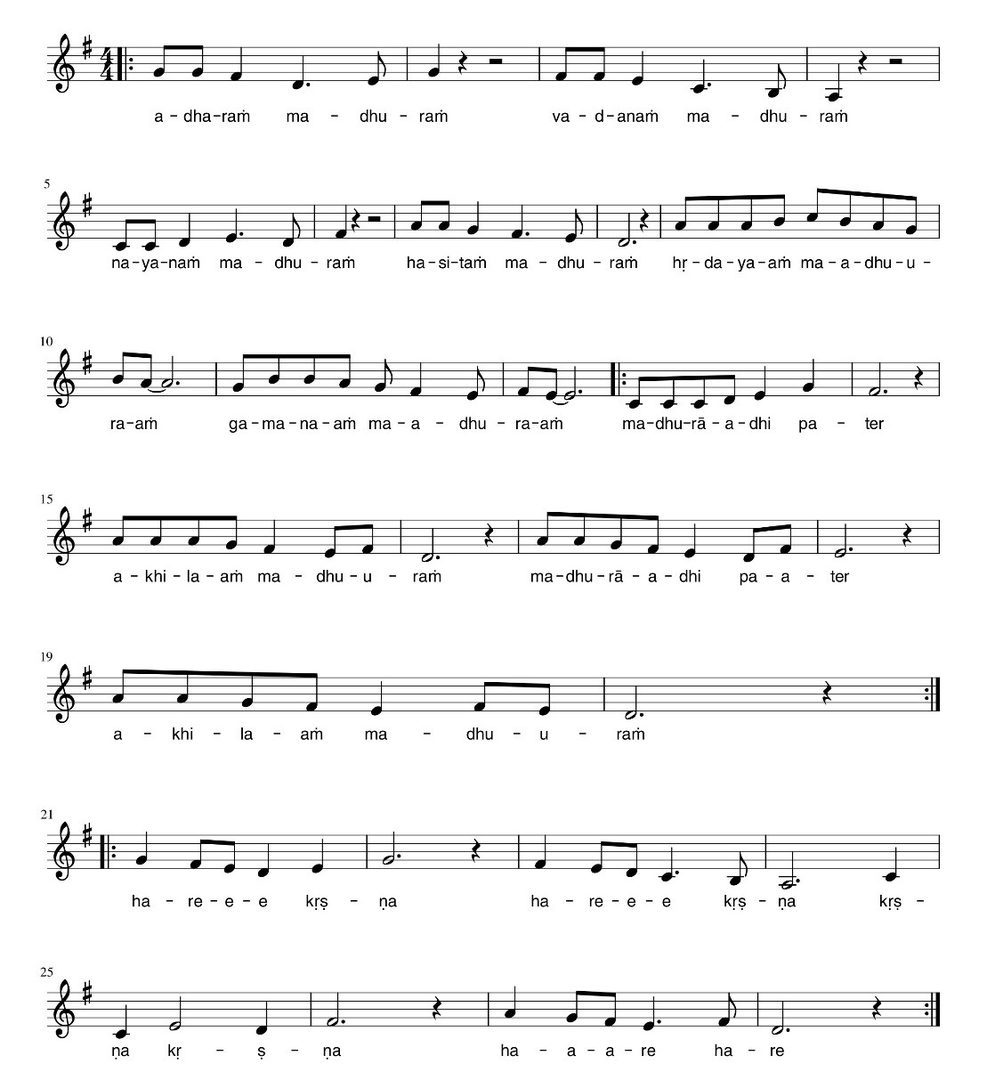
paramaḥ—the supreme; pumān—person; yaḥ—who; govindam—Govinda; ādi- puruṣam—the original person; tam—Him; aham—I; bhajāmi—worship.
I worship Govinda, the primeval Lord, who manifested Himself personally as Kṛṣṇa and the different avatāras in the world in the forms of Rāma, Nṛsiṁha, Vāmana, etc., as His subjective portions.
40 yasya prabhā prabhavato jagad-aṇḍa-koṭi-
koṭiṣv aśeṣa-vasudhādi vibhūti-bhinnam tad brahma niṣkalam anantam aśeṣa-bhūtaṁ govindam ādi-puruṣaṁ tam ahaṁ bhajāmi yasya—of whom; prabhā—the effulgence; prabhavataḥ—of one who excels in power; jagat-aṇḍa—of universes; koṭi-koṭiṣu—in millions and millions; aśeṣa— unlimited; vasudhā-ādi—with planets and other manifestations; vibhūti—with opulences; bhinnam—becoming variegated; tat—that; brahma—Brahman; niṣkalam—without parts; anantam—unlimited; aśeṣa-bhūtam—being complete; govindam—Govinda; ādi-puruṣam—the original person; tam—Him; aham—I; bhajāmi—worship.
I worship Govinda, the primeval Lord, whose effulgence is the source of the nondifferentiated Brahman mentioned in the Upaniṣads, being differentiated from the infinity of glories of the mundane universe appears as the indivisible, infinite, limitless, truth.
41 māyā hi yasya jagad-aṇḍa-śatāni sūte traiguṇya-tad-viṣaya-veda-vitāyamānā sattvāvalambi-para-sattvaṁ viśuddha-sattvam- govindam ādi-puruṣaṁ tam ahaṁ bhajāmi māyā—the external potency; hi—indeed; yasya—of whom; jagat-aṇḍa—of universes; śatāni—hundreds; sūte—brings forth; trai-guṇya—embodying the threefold mundane qualities; tat—of that; viṣaya—the subject matter; veda—the Vedic knowledge; vitāyamānā—diffusing; sattva-avalambi—the support of all existence; para-sattvam—the ultimate entity; viśuddha-sattvam—the absolute substantive principle; govindam—Govinda; ādi-puruṣam—the original person; tam—Him; aham—I; bhajāmi—worship.
I worship Govinda, the primeval Lord, who is the absolute substantive principle being the ultimate entity in the form of the support of all existence whose external potency embodies the threefold mundane qualities, viz., sattva, rajas, and tamas and diffuses the Vedic knowledge regarding the mundane world.
42 ānanda-cinmaya-rasātmatayā manaḥsu yaḥ prāṇināṁ pratiphalan smaratām upetya līlāyitena bhuvanāni jayaty ajasram- govindam ādi-puruṣaṁ tam ahaṁ bhajāmi ānanda—blissful; cit-maya—cognitive; rasa—of rasa; ātmatayā—due to being the entity; manaḥsu—in the minds; yaḥ—He who; prāṇinām—of living entities; pratiphalan—being reflected; smaratām upetya—recollecting; līlāyitena—by pastimes; bhuvanāni—the mundane world; jayati—triumphantly dominates; ajasram—ever; govindam—Govinda; ādi-puruṣam—the original person; tam— Him; aham—I; bhajāmi—worship.
I worship Govinda, the primeval Lord, whose glory ever triumphantly dominates the mundane world by the activity of His own pastimes, being reflected in the mind of recollecting souls as the transcendental entity of ever-blissful cognitive rasa.
43 goloka-nāmni nija-dhāmni tale ca tasya
devi maheśa-hari-dhāmasu teṣu teṣu te te prabhāva-nicayā vihitāś ca yena govindam ādi-puruṣaṁ tam ahaṁ bhajāmi goloka-nāmni—in the planet known as Goloka Vṛndāvana; nija-dhāmni—the personal abode of the Supreme Personality of Godhead; tale—in the part underneath; ca—also; tasya—of that; devi—of the Goddess Durgā; maheśa—of Lord Śiva; hari—of Nārāyaṇa; dhāmasu—in the planets; teṣu teṣu—in each of them; te te—those respective; prabhāva-nicayāḥ—opulences; vihitāḥ— established; ca—also; yena—by whom; govindam—Govinda; ādi-puruṣam—the original person; tam—Him; aham—I; bhajāmi—worship.
Lowest of all is located Devī-dhāma [mundane world], next above it is Maheśa-dhāma [abode of Maheśa]; above Maheśa-dhāma is placed Hari- dhāma [abode of Hari] and above them all is located Kṛṣṇa's own realm named Goloka. I adore the primeval Lord Govinda, who has allotted their respective authorities to the rulers of those graded realms.
44 sṛṣṭi-sthiti-pralaya-sādhana-śaktir ekā chāyeva yasya bhuvanāni bibharti durgā icchānurūpam api yasya ca ceṣṭate sā govindam ādi-puruṣaṁ tam ahaṁ bhajāmi sṛṣṭi—creation; sthiti—preservation; pralaya—and destruction; sādhana—the agency; śaktiḥ—potency; ekā—one; chāyā—the shadow; iva—like; yasya—of whom; bhuvanāni—the mundane world; bibharti—maintains; durgā—Durgā; icchā—the will; anurūpam—in accordance with; api—certainly; yasya—of whom; ca—and; ceṣṭate—conducts herself; sā—she; govindam—Govinda; ādi- puruṣam—the original person; tam—Him; aham—I; bhajāmi—worship.
The external potency Māyā who is of the nature of the shadow of the cit potency, is worshiped by all people as Durgā, the creating, preserving and destroying agency of this mundane world. I adore the primeval Lord Govinda in accordance with whose will Durgā conducts herself.
45 kṣīraṁ yathā dadhi vikāra-viśeṣa-yogāt
sañjāyate na hi tataḥ pṛthag asti hetoḥ yaḥ śambhutām api tathā samupaiti kāryād govindam ādi-puruṣaṁ tam ahaṁ bhajāmi kṣīram—milk; yathā—as; dadhi—yogurt; vikāra-viśeṣa—of a special transformation; yogāt—by the application; sañjāyate—is transformed into; na— not; hi—indeed; tataḥ—from the milk; pṛthak—separated; asti—is; hetoḥ—which is the cause; yaḥ—who; śambhutām—the nature of Lord Śiva; api—also; tathā— thus; samupaiti—accepts; kāryāt—for the matter of some particular business; govindam—Govinda; ādi-puruṣam—the original person; tam—Him; aham—I; bhajāmi—worship.
Just as milk is transformed into curd by the action of acids, but yet the effect curd is neither same as, nor different from, its cause, viz., milk, so I adore the primeval Lord Govinda of whom the state of Śambhu is a transformation for the performance of the work of destruction.
46 dīpārcir eva hi daśāntaram abhyupetya
dīpāyate vivṛta-hetu-samāna-dharmā
yas tādṛg eva hi ca viṣṇutayā vibhāti govindam ādi-puruṣaṁ tam ahaṁ bhajāmi dīpa-arciḥ—the flame of a lamp; eva—as; hi—certainly; daśā-antaram—another lamp; abhyupetya—expanding; dīpāyate—illuminates; vivṛta-hetu—with its expanded cause; samāna-dharmā—equally powerful; yaḥ—who; tādṛk—similarly; eva—indeed; hi—certainly; ca—also; viṣṇutayā—by His expansion as Lord Viṣṇu; vibhāti—illuminates; govindam—Govinda; ādi-puruṣam—the original person; tam—Him; aham—I; bhajāmi—worship.
The light of one candle being communicated to other candles, although it burns separately in them, is the same in its quality. I adore the primeval Lord
Govinda who exhibits Himself equally in the same mobile manner in His various manifestations.
47 yaḥ kāraṇārṇava-jale bhajati sma yoga- nidrām ananta-jagad-aṇḍa-sa-roma-kūpaḥ ādhāra-śaktim avalambya parāṁ sva-mūrtiṁ govindam ādi-puruṣaṁ tam ahaṁ bhajāmi yaḥ—He who; kāraṇa-arṇava—of the Causal Ocean; jale—in the water; bhajati— enjoys; sma—indeed; yoga-nidrām—creative sleep; ananta—unlimited; jagat- aṇḍa—universes; sa—with; roma-kūpaḥ—the pores of His hair; ādhāra-śaktim— the all-accommodating potency; avalambya—assuming; parām—great; sva- mūrtim—own subjective form; govindam—Govinda; ādi-puruṣam—the original person; tam—Him; aham—I; bhajāmi—worship.
I adore the primeval Lord Govinda who assuming His own great subjective form, who bears the name of Śeṣa, replete with the all-accommodating potency, and reposing in the Causal Ocean with the infinity of the world in the pores of His hair, enjoys creative sleep [yoga-nidrā].
48 yasyaika-niśvasita-kālam athāvalambya
jīvanti loma-vilajā jagad-aṇḍa-nāthāḥ viṣṇur mahān sa iha yasya kalā-viśeṣo govindam ādi-puruṣaṁ tam ahaṁ bhajāmi yasya—whose; eka—one; niśvasita—of breath; kālam—time; atha—thus; avalambya—taking shelter of; jīvanti—live; loma-vila-jāḥ—grown from the hair holes; jagat-aṇḍa-nāthāḥ—the masters of the universes (the Brahmās); viṣṇuḥ mahān—the Supreme Lord Mahā-Viṣṇu; saḥ—that; iha—here; yasya—whose; kalā-viśeṣaḥ—particular plenary portion or expansion; govindam—Govinda; ādi- puruṣam—the original person; tam—Him; aham—I; bhajāmi—worship.
Brahmā and other lords of the mundane worlds, appearing from the pores of hair of Mahā-Viṣṇu, remain alive as long as the duration of one exhalation of the latter [Mahā-Viṣṇu]. I adore the primeval Lord Govinda of whose subjective personality Mahā-Viṣṇu is the portion of portion.
49 bhāsvān yathāśma-śakaleṣu nijeṣu tejaḥ svīyam kiyat prakaṭayaty api tadvad atra brahmā ya eṣa jagad-aṇḍa-vidhāna-kartā govindam ādi-puruṣaṁ tam ahaṁ bhajāmi bhāsvān—the illuminating sun; yathā—as; aśma-śakaleṣu—in various types of precious stones; nijeṣu—his own; tejaḥ—brilliance; svīyam—his own; kiyat—to some extent; prakaṭayati—manifests; api—also; tadvat—similarly; atra—here; brahmā—Lord Brahmā; yaḥ—who; eṣaḥ—he; jagat-aṇḍa-vidhāna-kartā—the chief of the universe; govindam—Govinda; ādi-puruṣam—the original person; tam—Him; aham—I; bhajāmi—worship.
I adore the primeval Lord Govinda from whom the separated subjective portion Brahmā receives his power for the regulation of the mundane world, just as the sun manifests some portion of his own light in all the effulgent gems that bear the names of sūryakānta, etc.
50 yat-pāda-pallava-yugaṁ vinidhāya kumbha-
dvandve praṇāma-samaye sa gaṇādhirājaḥ vighnān vihantum alam asya jagat-trayasya govindam ādi-puruṣaṁ tam ahaṁ bhajāmi yat—whose; pāda-pallava—lotus feet; yugam—two; vinidhāya—having held; kumbha-dvandve—upon the pair of tumuli; praṇāma-samaye—at the time of offering obeisances; saḥ—he; gaṇa-adhirājaḥ—Gaṇeśa; vighnān—obstacles; vihantum—to destroy; alam—capable; asya—of these; jagat-trayasya—three worlds; govindam—Govinda; ādi-puruṣam—the original person; tam—Him; aham—I; bhajāmi—worship.
I adore the primeval Lord Govinda, whose lotus feet are always held by Gaṇeśa upon the pair of tumuli protruding from his elephant head in order to obtain power for his function of destroying all the obstacles on the path of progress of the three worlds.
51 agnir mahi gaganam ambu marud diśaś ca
kālas tathātma-manasīti jagat-trayāṇi yasmād bhavanti vibhavanti viśanti yaṁ ca govindam ādi-puruṣaṁ tam ahaṁ bhajāmi agniḥ—fire; mahi—earth; gaganam—ether; ambu—water; marut—air; diśaḥ— directions; ca—also; kālaḥ—time; tathā—as well as; ātma—soul; manasī—and mind; iti—thus; jagat-trayāṇi—the three worlds; yasmāt—from whom; bhavanti— they originate; vibhavanti—they exist; viśanti—they enter; yam—whom; ca—also; govindam—Govinda; ādi-puruṣam—the original person; tam—Him; aham—I; bhajāmi—worship.
The three worlds are composed of the nine elements, viz., fire, earth, ether, water, air, direction, time, soul and mind. I adore the primeval Lord Govinda from whom they originate, in whom they exist and into whom they enter at the time of the universal cataclysm.
52 yac-cakṣur eṣa savitā sakala-grahāṇāṁ
rājā samasta-sura-mūrtir aśeṣa-tejāḥ yasyājñayā bhramati sambhṛta-kāla-cakro govindam ādi-puruṣaṁ tam ahaṁ bhajāmi yat—of whom; cakṣuḥ—the eye; eṣaḥ—the; savitā—sun; sakala-grahāṇām—of all the planets; rājā—the king; samasta-sura—of all the demigods; mūrtiḥ—the image; aśeṣa-tejāḥ—full of infinite effulgence; yasya—of whom; ājñayā—by the order; bhramati—performs his journey; sambhṛta—complete; kāla-cakraḥ—the wheel of time; govindam—Govinda; ādi-puruṣam—the original person; tam—Him; aham— I; bhajāmi—worship.
The sun who is the king of all the planets, full of infinite effulgence, the image of the good soul, is as the eye of this world. I adore the primeval Lord Govinda in pursuance of whose order the sun performs his journey mounting the wheel of time.
53 dharmo 'tha pāpa-nicayaḥ śrutayas tapāṁsi
brahmādi-kīṭa-patagāvadhayaś ca jīvāḥ yad-datta-mātra-vibhava-prakaṭa-prabhāvā govindam ādi-puruṣaṁ tam ahaṁ bhajāmi dharmaḥ—virtue; atha—also; pāpa-nicayaḥ—all vices; śrutayaḥ—the Vedas; tapāṁsi—penances; brahma-ādi—beginning from Lord Brahmā; kīṭa-pataga— insects; avadhayaḥ—down to; ca—and; jīvāḥ—living entity; yat—by whom; datta—conferred; mātra—exclusively; vibhava—by the power; prakaṭa— manifested; prabhāvāḥ—potencies; govindam—Govinda; ādi-puruṣam—the original person; tam—Him; aham—I; bhajāmi—worship.
I adore the primeval Lord Govinda, by whose conferred power are maintained the manifested potencies, that are found to exist, of all virtues, all vices, the Vedas, the penances and all jīvas, from Brahmā to the meanest insect.
54 yas tv indragopam athavendram aho sva-karma-
bandhānurūpa-phala-bhājanam ātanoti karmāṇi nirdahati kintu ca bhakti-bhājāṁ govindam ādi-puruṣaṁ tam ahaṁ bhajāmi yaḥ—He who (Govinda); tu—but; indra-gopam—to the small red insect called indragopa; atha vā—or even; indram—to Indra, king of heaven; aho—oh; sva- karma—of one's own fruitive activities; bandha—bondage; anurūpa—according to;
phala—of reactions; bhājanam—enjoying or suffering; ātanoti—bestows; karmāṇi—all fruitive activities and their reactions; nirdahati—destroys; kintu—but; ca—also; bhakti-bhājām—of persons engaged in devotional service; govindam— Govinda; ādi-puruṣam—the original person; tam—Him; aham—I; bhajāmi— worship.
I adore the primeval Lord Govinda, who burns up to their roots all fruitive activities of those who are imbued with devotion and impartially ordains for each the due enjoyment of the fruits of one's activities, of all those who walk in the path of work, in accordance with the chain of their previously performed works, no less in the case of the tiny insect that bears the name of indragopa than in that of Indra, king of the devas.
55 yaṁ krodha-kāma-sahaja-praṇayādi-bhīti- vātsalya-moha-guru-gaurava-sevya-bhāvaiḥ sañcintya tasya sadṛśīṁ tanum āpur ete govindam ādi-puruṣaṁ tam ahaṁ bhajāmi yam—upon whom; krodha—wrath; kāma—amorous passion; sahaja-praṇaya— natural friendly love; ādi—and so on; bhīti—fear; vātsalya—parental affection; moha—delusion; guru-gaurava—reverence; sevya-bhāvaiḥ—and with the attitude of willing service; sañcintya—meditating; tasya—of that; sadṛśīm—befitting; tanum—bodily form; āpuḥ—attained; ete—these persons; govindam—Govinda; ādi-puruṣam—the original person; tam—Him; aham—I; bhajāmi—worship.
I adore the primeval Lord Govinda, the meditators of whom, by meditating upon Him under the sway of wrath, amorous passion, natural friendly love, fear, parental affection, delusion, reverence and willing service, attain to bodily forms befitting the nature of their contemplation.
Commentary
These verses from the Fifth Chapter of the Brahma-saṁhitā have a special significance for all followers of Śrī Caitanya Mahāprabhu who discovered them in a temple during His tour of South India. Śrīla Prabhupāda sang them many times and there are many different recordings of these verses which are also known as the “Cintāmani Prayers.” Our version is based one of the tunes Prabhupāda used to chant. We would have loved to give a quote for each of the verses, but that would require almost a separate volume. There are so many verses Prabhupāda used to quote from Brahma-saṁhitā, practically in every lecture at least one. Therefore, we will only present quotes for the eight most quoted verses.
29 Lecture on Bhagavad-gītā 2.11 – New York, March 4, 1966 Just like our friend, Mr. Cohen, he has left for California. Now, so far I am concerned, I have no idea of California. Now, he has told me that after reaching there, he'll write about the description of the place. Now, suppose if, reading that description of the place, I think of going there, so I prepare myself, "Oh, I must go there." So just like I, I was describing that cintāmaṇi- dhāma, what sort of trees are there. And you were very much pleased that "I must go there." So we have to hear. Unless we hear what sort of God He is, what sort of God's place is, what is the mode of life there, we cannot be attracted. 30 Lecture on Brahma-saṁhitā 5.30 – San Francisco, September 13, 1968 The description is that Govinda is very fond of playing on flute, venum. Venum means flute. Veṇuṁ kvaṇantam aravinda-dalāyatākṣaṁ. His eyes are just like lotus petals. Very beautiful eyes. Barhāvataṁsam. And He likes peacock feather on the head. So you will find Kṛṣṇa always with peacock feather. He wears a very valuable helmet, helmet on His head, but you will find one peacock feather. Asitāmbuda- sundarāṅgam, and His complexion of the body is blackish, just like new clouds. He is not that complexion light; He is blackish, Kṛṣṇa, but He is so beautiful, all- attractive. Here, of course, in this material world, blackish we do not like; we want fair complexion. But Kṛṣṇa, the original person, He is blackish, but not blackish like this. Kandarpa-koti-kamaniya-visesa-sobham. His beauty is surpassing many millions of Cupids. You have heard the name of Cupid. He is a very enchanting person, loving person. But here it is descibed, kandarpa-koṭi-kamanīya-viśeṣa-śobhaṁ. If you assemble millions of Cupids in one place, still it cannot be compared with the beauty of Kṛṣṇa, Kṛṣṇa is so beautiful. 32 Lecture on Brahma-saṁhitā – New York, July 25, 1971 So Govinda, aṅgāni yasya sakalendriya-vṛtti-manti. Aṅgāni, aṅgāni means the limbs of the body. Just like hands, legs, ear, nose, they're different parts of our body. The distinction between this material body and spiritual body is that just like this hand is made for particular purpose—you can pick up something, you can touch something, but you cannot taste something. If you want to taste something, then the hand will bring that food to your mouth and will touch your tongue. Then you can know that it is bitter or sweet. But simply by touching the hand it is not possible to understand what is the nature of that particular... Therefore God's body is described here that aṅgāni yasya sakalendriya-vṛtti-manti. Each and every part of the body has got the capacity for other parts of the body. Just like if you want to eat, we have to taste it through the tongue, through the mouth; but Kṛṣṇa, or God, if He simply sees only, He can eat, simply by seeing. This is spiritual body.
33 Śrīmad-Bhāgavatam 3.24.31 – Purport In the Brahma-saṁhitā it is stated that the Lord is one Absolute, but He has ananta, or innumerable, forms. Advaitam acyutam anādim ananta-rūpam. The Lord is the original form, but still He has multiforms. Those multiforms are manifested by Him transcendentally, according to the tastes of His multidevotees. It is understood that once Hanumān, the great devotee of Lord Rāmacandra, said that he knew that Nārāyaṇa, the husband of Lakṣmī, and Rāma, the husband of Sītā, are one and the same, and that there is no difference between Lakṣmī and Sītā, but as for himself, he liked the form of Lord Rāma. In a similar way, some devotees worship the original form of Kṛṣṇa. When we say "Kṛṣṇa" we refer to all forms of the Lord—not only Kṛṣṇa, but Rāma, Nṛsiṁha, Varāha, Nārāyaṇa, etc. 37 Lecture on Śrī Caitanya-caritāmṛta, Madhya-līlā 20.110 – New York, July 17, 1976 So everywhere the potency of the Supreme Lord is working. Very good example, exactly like the illumination, sunshine, moonshine, they are influencing the creation and they are situated in their own place, and they are all different potencies of the Supreme Personality of Godhead. So this is the potency of Kṛṣṇa. Kṛṣṇa is engaged in Vṛndāvana, Goloka Vṛndāvana. Goloka eva nivasaty akhilātma-bhūtaḥ. Although He is in the Goloka Vṛndāvana, He is playing with His cowherd boyfriends and the gopīs and His father and mother, but still He's expanded all over the creation. That is Kṛṣṇa. That is Kṛṣṇa. Goloka eva nivasaty akhilātma-bhūtaḥ. Just like we live in some apartment. Now we are here, we are absent from that apartment. God is not like that. God is in His apartment, at the same time universally present. 38 Lecture on Brahma-saṁhitā 5.38 – New York, November 5, 1966 Now, people say that "Whether God can be seen? If anyone has seen God?" Yes, God can be seen. There is no doubt about it. But it requires some qualification. Not some, but only one qualification. God is so kind that He does not require any material qualification. He does not require that you should be very learned man, very beautiful, or very rich man, or a king or emperor or minister or president, no, nothing of the sort. You can be anything. But only one qualification required. Then you can see God. What is that qualification? [Sings:] Premāñjana-cchurita-bhakti-vilocanena santaḥ sadaiva hṛdayeṣu viloka- yanti. That qualification is unalloyed love. That's all. Unalloyed love means without any tinge of philosophical speculation or fruitive activities. That's another subject; it requires great explanation. But unalloyed love means without any tinge of material color. That is called unalloyed. Even philosophical speculation or fruitive activitie s, even if it is offered to the Supreme Lord, that is not love. Love is above this. So if one can achieve that unalloyed love for God, with that, I mean to say, magic wand, the eyes become eligible for seeing God. Premāñjana-cchurita-bhakti-vilocanena. And that eye is called devotional eye. Not only eyes, but every part of our body, we have to spiritualize by the contact. By the contact of spiritual service in devotion of the Lord, we can gradually spiritualize our whole set of senses. Just like a iron rod given to the fire: gradually the temperature rises. It becomes warm, warmer, warmest, very hot, then red hot. When it is red hot, then it is no longer iron; it is fire. Similarly, by our contact in devotional service of the Lord we can change the whole position of our material existence. If we have developed to that stage of unalloyed love for God, then God can be seen twenty-four hours, not that once seen and again not seen. No. This is described here, that santaḥ, the great devotees, unalloyed devotees, who are liberated souls, have no connection with material activities or philosophical speculation, such unalloyed devotees, because their eyes are smeared with the ointment of love only, therefore they can see the Lord sadaiva, always, twenty-four hours. 35+40 Śrīmad-Bhāgavatam 10.3.24 – Purport The Absolute Truth is described later in the Śrīmad-Bhāgavatam (10.28.15) as satyaṁ jñānam anantam yad brahma-jyotiḥ sanātanam. The brahmajyoti is sanātana, eternal, yet it is dependent on Kṛṣṇa (brahmaṇo hi pratiṣṭhāham). The Brahma-saṁhitā (5.35) states that the Lord is all-pervading. Aṇḍāntara-stha- paramāṇu-cayāntara-stham: He is within this universe, and He is within the atom as Paramātmā. Yasya prabhā prabhavato jagad-aṇḍa-koṭi-koṭiṣv aśeṣa- vasudhādi-vibhu-ti-bhinnam: Brahman is also not independent of Him. Therefore whatever a philosopher may describe is ultimately Kṛṣṇa, or Lord Viṣṇu (sarvaṁ khalv idaṁ brahma, paraṁ brahma paraṁ dhāma pavitraṁ paramaṁ bhavān). According to different phases of understanding, Lord Viṣṇu is differently described, but in fact He is the origin of everything. 52 Śrīmad-Bhāgavatam 10.3.26 – Purport Everything is under the control of time, and time is controlled by the Supreme Personality of Godhead. Therefore the Supreme Lord has no fear of the onslaughts of time. Time is estimated according to the movements of the sun (savitā). Every minute, every second, every day, every night, every month and every year of time can be calculated according to the sun's movements. But the sun is not independent, for it is under time's control. Bhramati saṁbhṛta-kāla-cakraḥ: the sun moves within the kāla-cakra, the orbit of time. The sun is under the control of time, and time is controlled by the Supreme Personality of Godhead. Therefore the Lord has no fear of time.
Śrīla Prabhupāda offering the first ārati to Rādhā-Gokulānanda in Bhaktivedanta Manor, 1973